


Tipos de Casos de Reclamaciones por Lesiones de Peatones que Trabajamos en Boston
La Oficina Legal de John J. Sheehan representa a personas lesionadas en accidentes de peatones relacionados con:
• Conductores que no se detienen para permitir el paso de peatones en cruces peatonales señalizados.
• Vehículos que giran en intersecciones y atropellan a peatones.
• Automóviles, camiones o furgonetas de reparto que se suben a la acera o invaden zonas peatonales.
• Conductores que retroceden al salir de espacios de estacionamiento, entradas de vehículos, callejones o zonas de carga.
• Accidentes de peatones en zonas escolares y paradas de autobús.
• Accidentes de peatones en estacionamientos.
• Accidentes de peatones provocados por conductores que se dan a la fuga.
• Accidentes causados por conductores sin seguro o con seguro insuficiente.
• Accidentes que involucran vehículos de reparto, servicios de transporte por aplicación, taxis, autobuses y vehículos comerciales.
• Casos en los que la compañía de seguros intenta responsabilizar al peatón por cruzar fuera del paso peatonal o con la señal en contra.
Los casos de accidentes de peatones suelen depender de pequeños detalles, como la secuencia de los semáforos, la ubicación del cruce peatonal, si el conductor estaba girando, si otro vehículo se había detenido, la velocidad a la que circulaba el conductor y si alguna cámara grabó el accidente.
Por qué los Accidentes de Peatones en Boston son Diferentes
La configuración de Boston, con sus calles estrechas, gran cantidad de peatones y obras de construcción constantes, aumenta considerablemente el riesgo de accidentes. Aunque un conductor afirme que no vio al peatón, sigue teniendo la obligación legal de mantenerse atento al camino, ceder el paso cuando corresponda y conducir a una velocidad segura.
Los recursos del programa Vision Zero de Boston registran los patrones de accidentes y las zonas más peligrosas de la ciudad. Esa información puede ayudar a demostrar que determinada intersección, cruce o tramo de calle ya era conocido por representar un riesgo para los peatones.
Las estadísticas nacionales también reflejan la gravedad de este tipo de accidentes. La Governors Highway Safety Association informó que, durante 2024, los conductores atropellaron y causaron la muerte de 7,148 peatones en Estados Unidos.
La Ley de Prioridad de Paso para Peatones en Massachusetts
La legislación de Massachusetts brinda protección a los peatones que utilizan cruces peatonales señalizados. De acuerdo con la M.G.L. c. 89, § 11, cuando no existen semáforos o estos no funcionan, el conductor debe ceder el paso a un peatón que se encuentre en un cruce peatonal marcado si el peatón está en la misma mitad de la calzada por la que circula el vehículo o a una distancia de hasta 10 pies de esa mitad de la vía. La ley también prohíbe que un conductor adelante a otro vehículo que se haya detenido para permitir el paso de un peatón en un cruce peatonal.
Esta norma suele ser determinante cuando un peatón resulta atropellado porque un conductor:
- Cruzó un paso peatonal sin detenerse por completo.
- Giró e impactó a una persona que ya estaba cruzando.
- Adelantó a un vehículo detenido antes de un cruce peatonal.
- Circulaba a una velocidad excesiva para la zona.
- Prestó atención únicamente al tráfico y no a los peatones.
El hecho de que exista un cruce peatonal puede fortalecer su caso, pero por sí solo no demuestra toda la responsabilidad. Las fotografías, los videos, los datos de los testigos, el informe policial, los expedientes médicos y las declaraciones del conductor también pueden influir en el resultado del caso.
¿Quién Puede ser Responsable de un Accidente de Peatón?
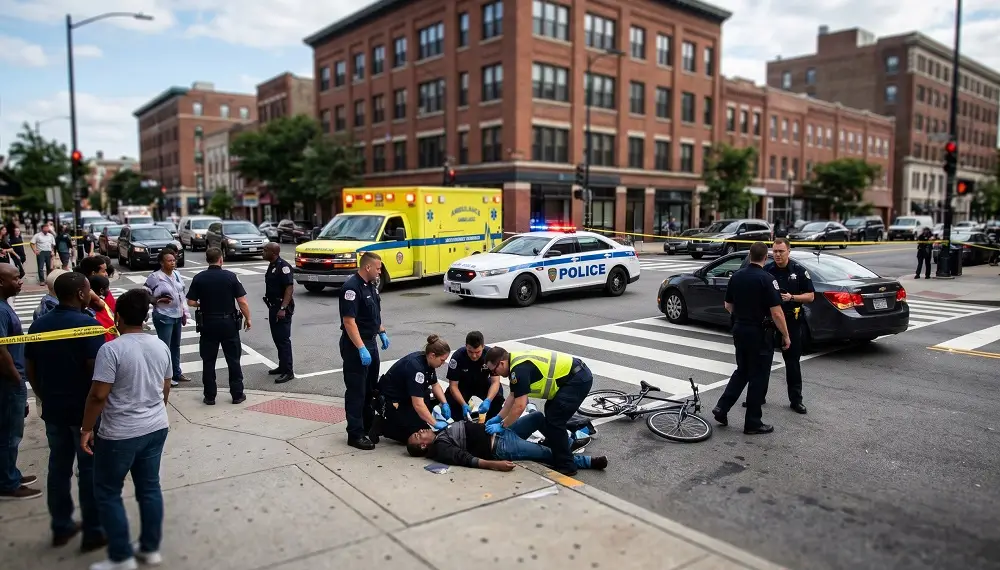
La mayoría de las reclamaciones comienzan contra el conductor que atropelló al peatón. Sin embargo, dependiendo de las circunstancias, otras personas o entidades también pueden ser responsables.
- El conductor puede ser responsable por exceso de velocidad, conducir distraído, no ceder el paso, realizar giros inseguros, conducir bajo los efectos del alcohol o las drogas, o retroceder sin verificar si había peatones.
- El empleador puede ser responsable si el conductor estaba trabajando al momento del accidente, como ocurre con conductores de reparto, vehículos comerciales, plataformas de transporte por aplicación, taxis, contratistas o trabajadores de servicio.
- El propietario del vehículo o una empresa también pueden formar parte del caso si el accidente involucró un vehículo comercial, una furgoneta de reparto, un camión o un vehículo perteneciente a una flota empresarial.
- Una entidad pública o un operador de transporte público pueden ser responsables si el accidente involucró un vehículo de la MBTA, un vehículo municipal, un vehículo estatal o una condición peligrosa en una propiedad pública. Estos casos pueden estar sujetos a requisitos especiales de notificación y plazos más cortos para presentar una reclamación.
Un abogado de accidentes de peatones en Boston puede identificar las pólizas de seguro disponibles y determinar qué personas o entidades deben ser incluidas en la reclamación.
Lesiones Comunes Después de un Accidente de Peatón
Los accidentes de peatones suelen provocar lesiones graves porque la persona absorbe toda la fuerza del impacto del vehículo y posteriormente golpea el pavimento u otra superficie dura. Entre las lesiones más comunes se encuentran:
- Conmociones cerebrales y lesiones cerebrales traumáticas.
- Fracturas y huesos rotos.
- Lesiones en la cadera, pelvis, rodillas, tobillos y pies.
- Lesiones en la espalda, el cuello y la médula espinal.
- Hemorragias internas o daños en órganos internos.
- Lesiones en hombros, muñecas y manos provocadas por la caída.
- Cortes, cicatrices y lesiones faciales.
- Dolor crónico y limitación de la movilidad.
- Ansiedad, problemas para dormir y trauma emocional después del accidente.
- Lesiones mortales y casos de muerte por negligencia.
Algunas lesiones no son evidentes inmediatamente después del accidente. Es posible que un peatón comience a sentir dolor horas o incluso días más tarde, especialmente cuando se trata de lesiones en la cabeza, la espalda, el cuello o lesiones internas. Además, recibir atención médica de inmediato permite crear un historial médico que vincule directamente las lesiones con el accidente
¿Atropellado Mientras Caminaba en Boston?
Hable con nuestro abogado con experiencia y con su equipo antes de dar una declaración grabada a la compañía de seguros.

Quién Paga Primero y Qué Sucede si Intentan Culparlo
1. La cobertura PIP puede ser la primera en pagar. El seguro sin culpa (No-Fault) de Massachusetts puede cubrir los gastos médicos iniciales y una parte de los salarios perdidos después de un accidente de peatón. Conforme a la M.G.L. c. 90, § 34A, la cobertura PIP puede aplicarse cuando un peatón es atropellado por un vehículo motorizado cubierto por una póliza de seguro.
2. Una lesión grave puede permitir presentar una reclamación adicional. La cobertura PIP normalmente no es suficiente cuando un peatón sufre lesiones graves. Si sus gastos médicos superan los $2,000, o el accidente le provocó una fractura, una desfiguración grave, la pérdida de la vista o del oído, la pérdida de una parte del cuerpo o la muerte, es posible que pueda reclamar una compensación por el dolor y el sufrimiento conforme a la M.G.L. c. 231, § 6D.
3. Compartir parte de la responsabilidad no siempre impide obtener una compensación. La compañía de seguros puede alegar que usted cruzó demasiado rápido, que lo hizo fuera del cruce peatonal o que ignoró una señal de tránsito. Massachusetts aplica la regla de negligencia comparativa establecida en la M.G.L. c. 231, § 85. Esto significa que usted todavía puede obtener una compensación aunque tenga parte de la responsabilidad, siempre que su porcentaje de culpa no supere el 50 %. La compensación que reciba se reducirá de acuerdo con su porcentaje de responsabilidad.
Por ejemplo, si se determina que usted tuvo un 20 % de responsabilidad, la compensación se reducirá en un 20 %, pero no será rechazada por completo.
¿Qué Compensación Puede Recuperar?
Una reclamación por un accidente de peatón puede incluir tanto pérdidas económicas como daños personales. El valor del caso dependerá de la gravedad de las lesiones, el tratamiento médico recibido, el impacto en su capacidad para trabajar, la cobertura de seguro disponible y las pruebas que demuestren la responsabilidad.
Es posible que pueda obtener una compensación por:
- Servicios de ambulancia y atención en la sala de emergencias.
- Hospitalización y cirugías.
- Consultas médicas, fisioterapia, estudios de diagnóstico por imágenes, medicamentos e inyecciones.
- Tratamiento médico futuro.
- Salarios perdidos.
- Disminución de la capacidad de generar ingresos en el futuro.
- Gastos de transporte para acudir a citas médicas.
- Ayuda para realizar las tareas del hogar durante la recuperación.
- Equipos médicos o dispositivos de movilidad.
También puede solicitar una compensación por:
- Dolor físico.
- Sufrimiento emocional.
- Pérdida del sueño.
- Miedo a caminar cerca del tráfico.
- Cicatrices o desfiguración.
- Limitaciones permanentes.
- Pérdida del disfrute de las actividades cotidianas.
- Consecuencias en la vida familiar, incluida la pérdida de compañía o de la relación conyugal sufrida por su cónyuge.
Si el accidente de peatón ocasionó la muerte de la víctima, los familiares sobrevivientes podrían tener derecho a presentar una demanda por muerte por negligencia.
Pasos a Seguir Después de un Accidente de Peatón en Boston
Siempre que su estado de salud y seguridad lo permitan, siga estos pasos:
- Llame al 911 y solicite la presencia de la policía y de los servicios médicos de emergencia.
- Busque atención médica, aunque piense que sus lesiones son leves.
- Tome fotografías del vehículo, del cruce peatonal, de los semáforos, de las señales de tránsito, de las condiciones de la vía y de las lesiones visibles.
- Obtenga el nombre del conductor, su número de teléfono, el número de placa, la compañía de seguros y la información del vehículo.
- Solicite los nombres y números de teléfono de los testigos.
- Busque cámaras cercanas en negocios, viviendas, autobuses, vehículos de transporte por aplicación o cámaras de tablero.
- No discuta sobre quién tuvo la culpa en el lugar del accidente.
- No proporcione una declaración grabada a la compañía de seguros antes de hablar con un abogado.
- Guarde todas las facturas médicas, documentos de alta médica, justificantes laborales, fotografías y toda la correspondencia enviada por las compañías de seguros.
- Comuníquese con un abogado de accidentes de peatones en Boston antes de que se pierdan pruebas importantes.
La legislación de Massachusetts también exige la presentación de un informe del accidente cuando una persona resulta lesionada o fallece, o cuando los daños materiales superan los $1,000. Los peatones que hablen español deben solicitar un oficial que hable español, un intérprete o una explicación traducida antes de firmar cualquier documento.
Solicite Hoy Mismo una Evaluación Gratuita de su Caso
Si fue atropellado mientras caminaba, nuestro equipo de abogados de accidentes peatonales en Boston trabajará para demostrar la responsabilidad de la parte culpable, evitar que las compañías de seguros intenten atribuirle la culpa y buscar la compensación total que le corresponde conforme a la legislación de Massachusetts.