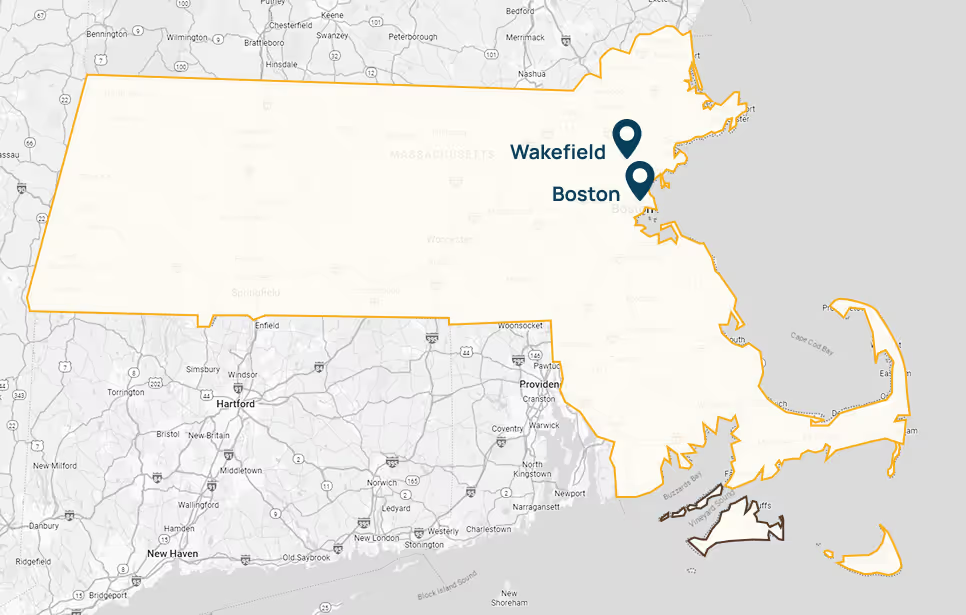



Cuando Se Producen Lesiones por Amputación en los Lugares de Trabajo de Boston
Perder una extremidad lo cambia todo. Ya sea que su mano haya quedado aplastada en una máquina, su pierna haya sido amputada en un accidente de tráfico o una infección haya obligado a una amputación quirúrgica tras una lesión laboral, se enfrenta a una vida llena de retos que nadie debería enfrentar solo.
Las estadísticas son alarmantes. Los trabajadores en Massachusetts sufren más de 50,000 lesiones laborales anuales, algunos perdiendo dedos, pies o extremidades. Las lesiones industriales y relacionadas con el trabajo son la segunda causa principal de amputaciones en todo Estados Unidos, con más de 1,500 casos reportados en 2024.
No son solo cifras. Son personas cuyas vidas han quedado marcadas para siempre a causa de negligencia, equipos defectuosos o condiciones de trabajo inseguras.
Tipos de Lesiones por Amputación que Manejamos
En la Oficina Legal de John J. Sheehan, sabemos que la vida de nuestros clientes se ve trastornada tras sufrir lesiones laborales como estas:
- Amputaciones traumáticas: Partes del cuerpo seccionadas durante el accidente por maquinaria, equipo o fuerza aplastante.
- Amputaciones quirúrgicas: Partes del cuerpo extirpadas por médicos cuando el daño tisular, la infección o la mala circulación hacen imposible salvarlas.
- Amputaciones parciales: Separación incompleta donde el tejido, los nervios y los vasos sanguíneos permanecen parcialmente conectados.
- Amputaciones completas: Separación total de la extremidad o dedo del cuerpo.
- Lesiones por desguantamiento: Daño tisular grave que requiere extirpación quirúrgica aunque los huesos permanezcan intactos.
No importa cómo ocurra; cualquier pérdida de un dedo de la mano, un dedo del pie o una extremidad le cambia la vida.
Partes del Cuerpo Comúnmente Afectadas
Las partes del cuerpo afectadas por lesiones por amputación en el trabajo en Boston pueden incluir:
- Uno o más dedos de la mano o yemas de los dedos.
- Las manos.
- Brazos, ya sea por debajo o por encima del codo.
- Uno o más dedos del pie.
- Los pies.
- Piernas, ya sea por debajo o por encima de la rodilla.
Perder un dedo de la mano o del pie en un accidente laboral es más común que perder una extremidad completa.
Cómo Ocurren los Accidentes por Amputación en el Lugar de Trabajo en Boston
Las lesiones por amputación pueden ocurrir en cualquier lugar de trabajo de Boston. Sin embargo, algunas situaciones son más propensas a provocar la pérdida de dedos de las manos, de los pies y de extremidades.
Las prensas de potencia, cizallas de metal, sierras para madera, máquinas picadoras de carne, prensas de impresión y máquinas formadoras por rodillos causan lesiones devastadoras cuando los empleadores no instalan las protecciones de seguridad adecuadas.
Las normativas de la Administración de Seguridad y Salud Ocupacional (OSHA) de Massachusetts y federales exigen la protección de las máquinas en todos los puntos de operación, pero las infracciones siguen siendo habituales en las obras de construcción, las instalaciones defabricación y los almacenes del área de Boston.
Los trabajadores pueden sufrir amputaciones al quedar atrapados entre piezas de maquinaria en movimiento, aplastados entre equipos y estructuras, o arrastrados hacia cintas transportadoras.
Estos incidentes forman parte de los llamados “Cuatro Peligros Mortales” identificados por la Administración de Seguridad y Salud Ocupacional (OSHA) en la industria de la construcción. A menudo son consecuencia de procedimientos inadecuados de bloqueo y etiquetado, la falta de dispositivosde seguridad y calendarios de producción apresurados.
Los materiales que caen, las estructuras que colapsan y los vuelcos de equipo pesado crean fuerzas aplastantes masivas que destruyen tejido y hueso. Incluso cuando los cirujanos inicialmente salvan el miembro, la infección o necrosis tisular posterior pueden requerir una amputación semanas o meses después del accidente.
Los fabricantes tienen responsabilidad objetiva en lo que respecta a fallos de funcionamiento de herramientas eléctricas, fallos en las protecciones de seguridad y defectos de diseño de los equipos Nos ocupamos de casos relacionados con protecciones de sierra defectuosas que fallan durante el funcionamiento, maquinaria mal diseñada que atrapa las manos de los trabajadores y equipos vendidos sin las advertencias de seguridad adecuadas o sin las instrucciones correctas.
Las colisiones con montacargas, camiones de entrega y vehículos de construcción pueden causar lesiones graves en las extremidades. Ya sea que ocurra en el muelle de carga o en la carretera, un accidente puede resultar en una amputación traumática que requiere respuesta de emergencia inmediata.
La electrocución de alto voltaje y las quemaduras graves pueden destruir tejido de manera tan completa que la amputación es la única forma de salvar la vida de la víctima. Los contratistas eléctricos, compañías de servicios públicos y propietarios que no desenergizan fuentes de energía ni señalizana apropiadamente los servicios subterráneos pueden ser responsables cuando su negligencia causa estas lesiones catastróficas.
Las explosiones de gas y las quemaduras químicas pueden dañar el tejido profundamente bajo la superficie de la piel. Incluso con tratamiento médico agresivo, una lesión térmica o química grave puede requerir una amputación para prevenir una infección sistémica que amenace la vida del paciente.
No Espere Para Buscar Justicia
Llame hoy a la Oficina Legal de John J. Sheehan para su revisión de caso gratuita.

El Verdadero Costo de Perder una Extremidad
Una amputación supone una catástrofe económica inmediata, seguida de décadas de gastos continuos.
Gastos Médicos Inmediatos
El tratamiento de emergencia por amputación traumática comienza con intervenciones para salvar la vida, que pueden acumularse antes de que los cirujanos ingresen al quirófano. En Massachusetts, las estancias hospitalarias cuestan casi $4,000 por día en promedio. Los costos de cuidados intensivos y las cirugías elevan estos gastos considerablemente.
Prótesis y Adaptaciones
Los dispositivos protésicos básicos comienzan en aproximadamente $5,000 para reemplazos simples. Las prótesis funcionales de mano pueden costar decenas de miles de dólares. Las piernas avanzadas controladas por microprocesador alcanzan $100,000 o más.
Sin embargo, estas no son compras únicas. Los componentes se desgastan y requieren reemplazo cada tres a cinco años. Con el tiempo, los cambios físicos pueden requerir prótesis con especificaciones diferentes.
Finalmente, muchos amputados necesitan múltiples dispositivos: prótesis cotidianas para actividades normales, versiones especializadas para tareas específicas y dispositivos de respaldo cuando las prótesis principales requieren reparación.
Rehabilitación y Cirugías de Revisión
La fisioterapia comienza en serio una vez que tiene un dispositivo protésico. Aprender a caminar con una pierna protésica requiere meses de sesiones de terapia intensiva. Si perdió una mano o un brazo, puede necesitar docenas de sesiones de terapia ocupacional para reaprender las habilidades de la vida diaria.
Los costos se acumulan rápidamente, y puede necesitar sesiones periódicas de repaso cuando obtenga una nueva prótesis o su condición cambie. En el camino, puede necesitar someterse a múltiples cirugías de revisión, añadiendo decenas de miles en gastos adicionales.
Salarios Perdidos y Capacidad de Ingresos
Los trabajadores de la construcción que pierden extremidades generalmente no pueden regresar a su oficio anterior. El trabajo manual que requiere trepar, levantar, operar maquinaria o mantener el equilibrio puede volverse imposible. Incluso los trabajadores de oficina enfrentan desafíos al usar computadoras, tomar notas y desplazarse al trabajo.
El trabajador de construcción promedio en Boston gana entre $57,000 y $95,000 anuales, sin contar beneficios. A lo largo de una carrera de 20 a 30 años, eso representa una pérdida de alrededor de $1 millón a $3 millones. Ese es el dinero que su familia necesita y merece.
Su abogado de lesiones por amputación en Boston puede recurrir a expertos vocacionales que calcularán la capacidad de ingresos reducida considerando su edad, educación, historial laboral, habilidades transferibles y limitaciones físicas.
Modificaciones del Hogar y el Vehículo
Muchos amputados usan sillas de ruedas, lo que exige puertas más anchas, rampas de entrada, baños modificados y cocinas adaptadas. Los vehículos deben modificarse para incluir controles manuales y elevadores de silla de ruedas. Estas adaptaciones esenciales pueden costar decenas de miles de dólares. Sin ellas, es difícil para un usuario de silla de ruedas mantener su independencia.
Dolor y Sufrimiento
La agonía física de la amputación va mucho más allá de la lesión inicial. El dolor del miembro fantasma afecta hasta el 80% de los amputados, con muchos describiendo sensaciones que van desde hormigueo y picazón hasta ardor severo y dolor aplastante en el miembro que ya no existe.
El dolor crónico por problemas del muñón, malestar con la prótesis y tensión compensatoria en otras partes del cuerpo requiere manejo del dolor continuo, frecuentemente costando miles anuales.
Impacto Psicológico y Emocional
Para muchas personas, la depresión, la ansiedad y el trastorno de estrés postraumático siguen a una amputación. El cambio repentino en la imagen corporal y la pérdida de independencia crean un trauma psicológico profundo. Muchos amputados requieren años de asesoramiento y tratamiento psiquiátrico, frecuentemente de manera indefinida.
Compensación Total de Por Vida por Amputaciones Relacionadas con el Trabajo
Los acuerdos en casos de amputación pueden oscilar desde cientos de miles de dólares por la pérdida de un dedo o un pie hasta millones de dólares cuando un trabajador joven con décadas de capacidad potencial de ingresos pierde una extremidad.
En La Oficina Legal de John J. Sheehan, trabajamos con planificadores de atención de por vida, expertos vocacionales y especialistas económicos para calcular sus necesidades completas de por vida.
Aquí hay un ejemplo hipotético: Joe, un trabajador de la construcción de 35 años, pierde su pierna por debajo de la rodilla en un accidente laboral. Incurre en $150,000 en costos médicos inmediatos por una semana de hospitalización y varias cirugías.
Después de salir del hospital, Joe acude a un abogado de lesiones por amputación en Boston, quien estima costos que incluyen $75,000 en rehabilitación y terapia, $50,000 en modificaciones del hogar y $1.2 millones en nuevas prótesis a lo largo de su vida. El abogado también calcula que Joe perderá $1.5 millones en capacidad de ingresos de por vida.
El abogado suma estas pérdidas, junto con daños sustanciales por dolor y sufrimiento, estimando que el valor potencial del caso de Joe sería de entre $3 millones y $4 millones.
Sus Derechos Legales Bajo la Ley de Massachusetts
Después de una lesión por amputación relacionada con el trabajo, puede tener múltiples caminos hacia la compensación.
El sistema de compensación laboral de Massachusetts proporciona beneficios inmediatos independientemente de quién tuvo la culpa. La cobertura incluye todo el tratamiento médico razonable, reemplazo temporal de salario de hasta el 60% de su salario semanal promedio y beneficios por incapacidad permanente según la gravedad y ubicación de su amputación.
Estos beneficios continúan incluso si usted es indocumentado. El estado migratorio nunca afecta su derecho a la compensación laboral en Massachusetts.
Cuando alguien que no es su empleador causó su amputación, puede presentar una demanda de lesiones personales por separado. Los terceros demandados en casos de amputación en el trabajo pueden incluir:
- Fabricantes de equipos cuyos productos defectuosos fallaron y causaron la lesión.
- Contratistas generales y subcontratistas cuya negligencia creó condiciones peligrosas.
- Propietarios de inmuebles que no mantuvieron instalaciones seguras.
- Otros conductores en amputaciones relacionadas con vehículos
- Empresas de mantenimiento cuyo trabajo inadecuado llevó al accidente.
Las reclamaciones de terceros pueden proporcionar compensación completa no disponible a través del sistema de compensación laboral: puede buscar el 100% de sus salarios perdidos en lugar del 60%, daños completos por dolor y sufrimiento, y compensación por el cambio en su calidad de vida.
Massachusetts responsabiliza estrictamente a los fabricantes por productos defectuosos que causan lesiones. Esto significa que no tiene que probar que el fabricante fue negligente. En cambio, debe demostrar que el equipo fue diseñado de manera defectuosa, fabricado incorrectamente o vendido sin advertencias adecuadas.
Esta poderosa herramienta legal abre la puerta a una demanda de terceros incluso si su empleador compró y proporcionó el equipo.
Para un proceso más fluido de compensación laboral, debe reportar su lesión a su empleador lo antes posible. Además, tiene tres años desde la fecha de su lesión para presentar una demanda de lesiones personales en Massachusetts.
Con el tiempo, la evidencia desaparece, los testigos olvidan y los retrasos debilitan los casos. Cuando contacta a un abogado desde el principio, no tendrá que apresurarse para cumplir los plazos.
La Administración de Seguridad y Salud Ocupacional (OSHA) exige a los empleadores que notifiquen todas las amputaciones en un plazo de 24 horas. Además, los registros de infracciones de seguridad a nivel federal y estatal pueden constituir pruebas contundentes en las reclamaciones por lesiones personales. Si es necesario, su abogado puede solicitar estos registros para documentar las condiciones inseguras y reforzar su caso.
A diferencia de algunos estados, Massachusetts no impone límites en los daños económicos o no económicos en casos de lesiones personales. Si su demanda contra terceros tiene éxito, el jurado puede otorgar la compensación que refleje con precisión sus pérdidas completas.
Llame Ahora para Su Consulta Gratuita