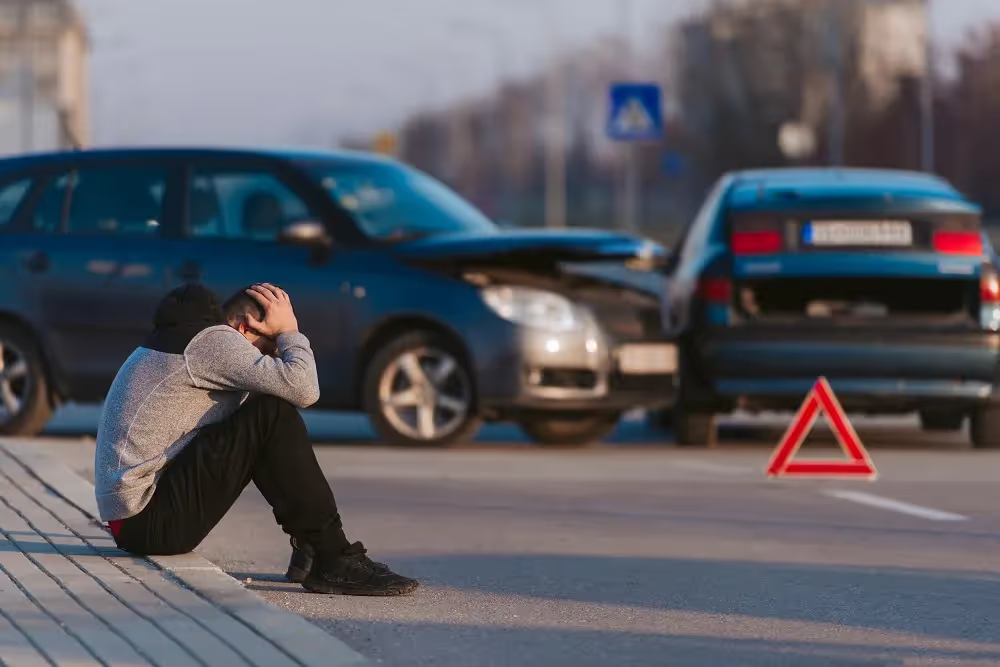
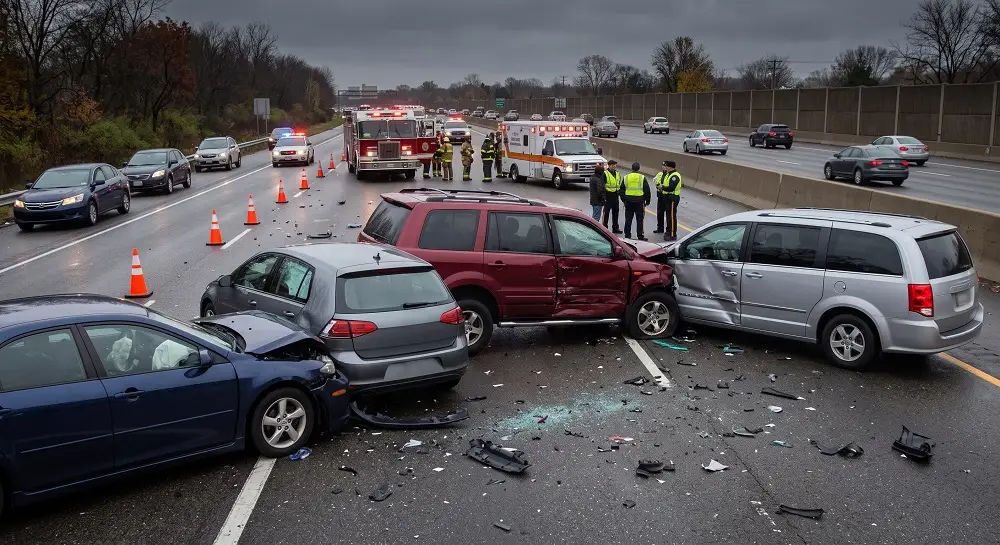
When three or more vehicles collide in a chain-reaction crash, fault is almost never limited to a single driver. Massachusetts follows a modified comparative negligence rule, so blame can be split among multiple parties based on the evidence. Every insurance company involved will run its own investigation and try to shift responsibility away from its policyholder and onto you.
The Law Office of John J. Sheehan helps people injured in multi-car pile-ups throughout Boston and Massachusetts fight back against those tactics. If you were hurt in a multi-vehicle collision, our skilled Boston car accident attorneys can review the facts and protect your right to compensation.
How Fault Works in a Multi-Vehicle Car Accident
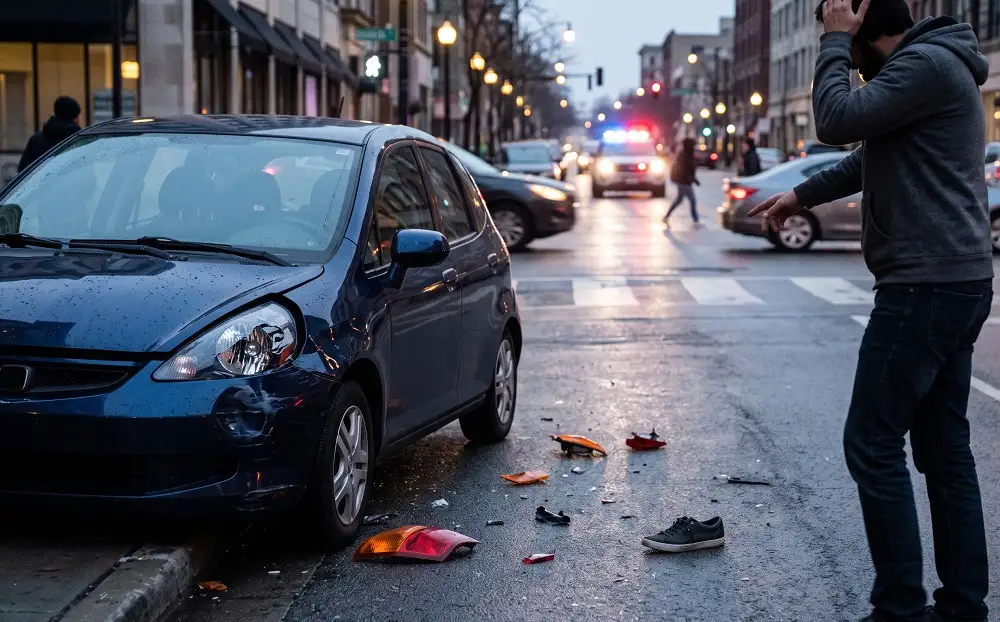
Determining fault in a multi-car accident starts with understanding how the collision unfolded. Unlike a standard two-car crash, a pile-up involves overlapping impacts, multiple points of contact, and conflicting accounts from every driver at the scene.
The Sequence of Impacts Matters
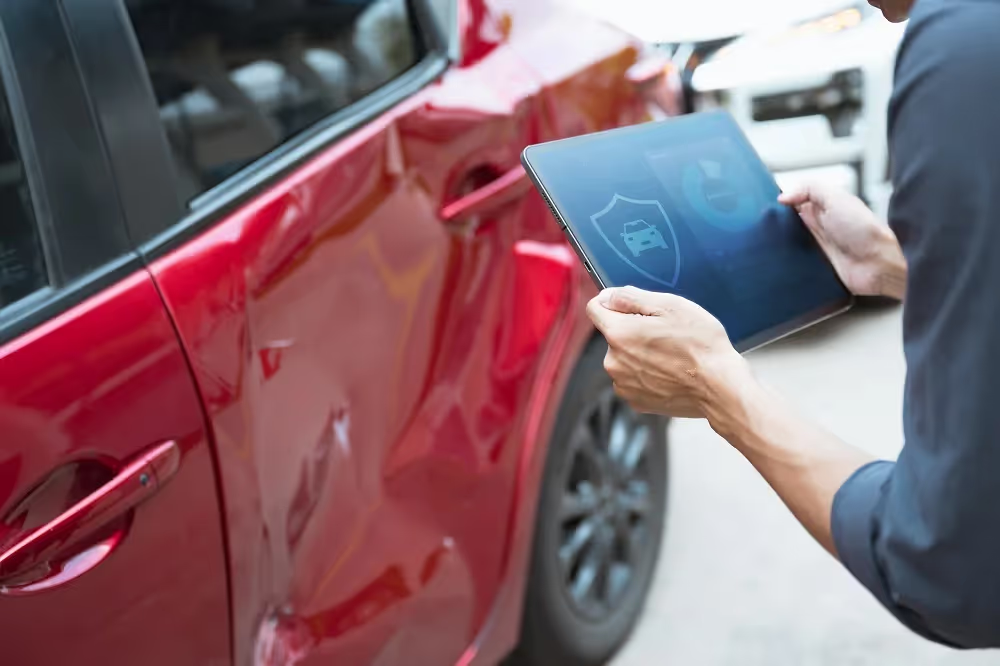
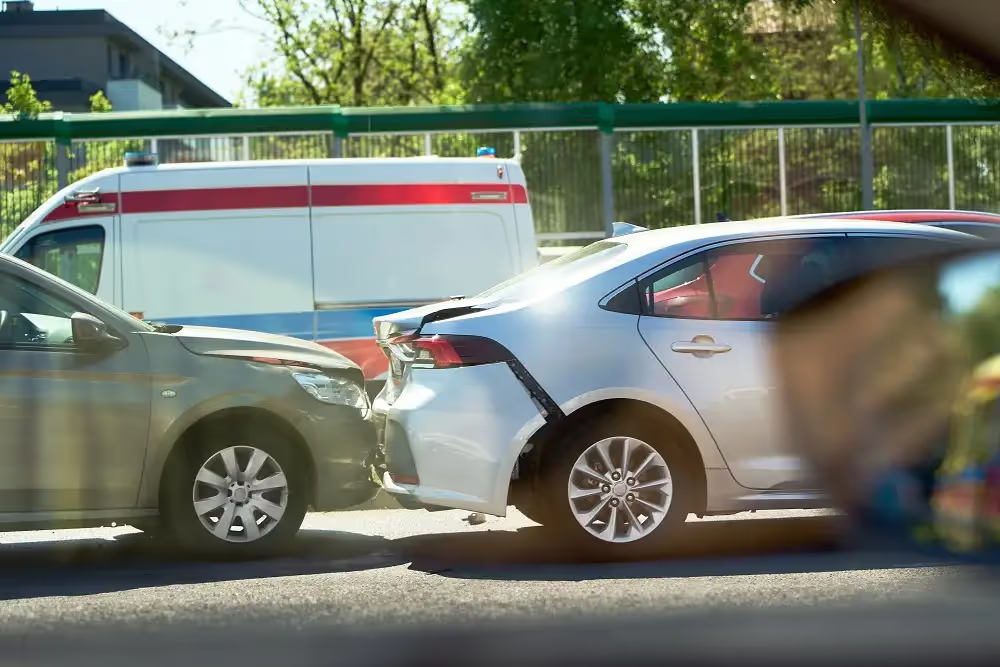
Identifying which two vehicles made first contact is critical. That single detail establishes how the chain reaction started and who set it in motion. For example, in a three-car rear-end collision on I-93, the rear driver may bear primary fault if that vehicle struck the middle car and pushed it forward. But if the middle car had already hit the lead car before the rear vehicle arrived, fault could be split between two drivers. Investigators reconstruct this sequence using vehicle damage patterns, debris fields, skid marks, and witness accounts.
Multiple Drivers Can Share Fault
In many pile-ups, more than one driver contributed to the crash. The rear driver may have been tailgating while the middle driver was texting. A lead driver may have braked without warning. Massachusetts law allows a court or insurance company to assign a percentage of blame to each driver based on what the evidence shows.
Massachusetts Comparative Negligence and Multi-Car Crashes

Massachusetts follows a modified comparative negligence rule. This law directly affects how multi-car accident claims are resolved when fault is shared among several drivers.
The 51 Percent Rule
Under Massachusetts law, you can recover compensation for your injuries as long as your share of fault is not greater than the combined negligence of all drivers you are seeking damages from. If your fault reaches 51 percent or more, you lose the right to recover anything.
This rule is especially important in multi-vehicle collisions, where insurance companies may try to push your percentage of fault above that 50 percent line. Even a small shift in how blame is assigned can mean the difference between receiving a settlement and walking away with nothing.
How Fault Percentages Reduce Your Compensation
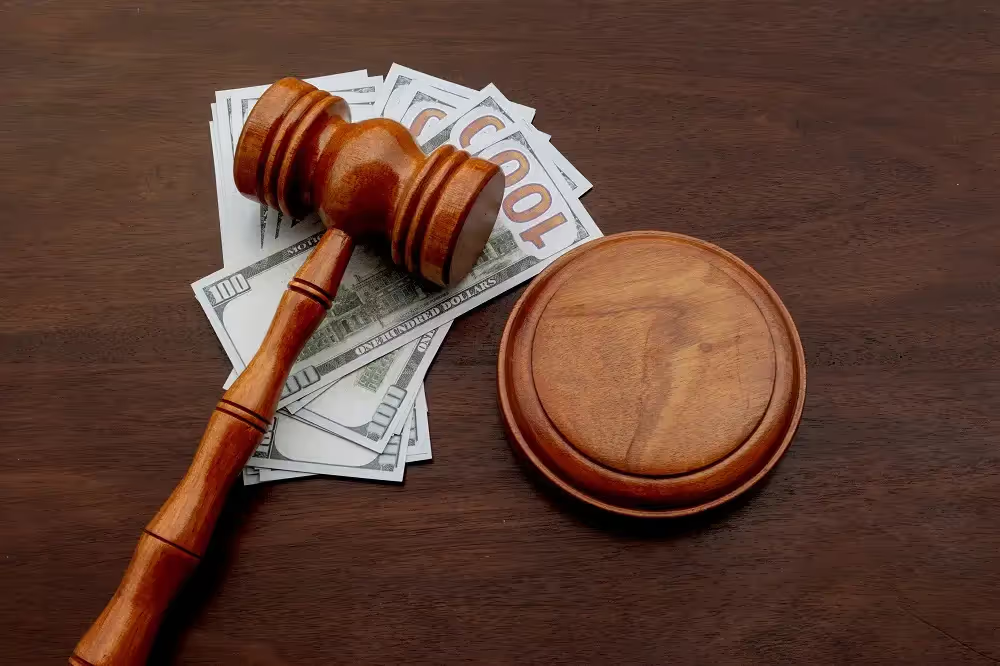
If you are partially at fault but below the 51 percent threshold, your damages are reduced by your percentage of responsibility. For instance, if a jury finds that your total damages are $150,000 but also decides you were 20 percent at fault for a multi-car pile-up, your recovery would be reduced to $120,000. The other 80 percent of fault would be split among the remaining drivers based on their respective contributions to the crash.
In a four-car accident where three drivers share blame, each driver's percentage of fault is calculated separately. The total across all parties must equal 100 percent. This calculation becomes more complex as the number of vehicles and drivers increases, which is why evidence preservation is critical after any multi-vehicle collision.
#cta_start
Injured in a Chain-Reaction Crash? Get Answers Now.
Talk to Attorney John J. Sheehan about your multi-car accident case. Free consultation. No fee unless we win. Hablamos español.
#cta_end
Common Causes of Multi-Car Pile-Up Accidents
Chain-reaction car crashes happen for many reasons, and multiple contributing factors can overlap in a single incident. Understanding what caused the pile-up is essential for proving fault and building a strong injury claim.
Frequent causes of multi-vehicle accidents include:
- Tailgating: A driver following too closely cannot stop in time when the vehicle ahead brakes, triggering a rear-end chain reaction.
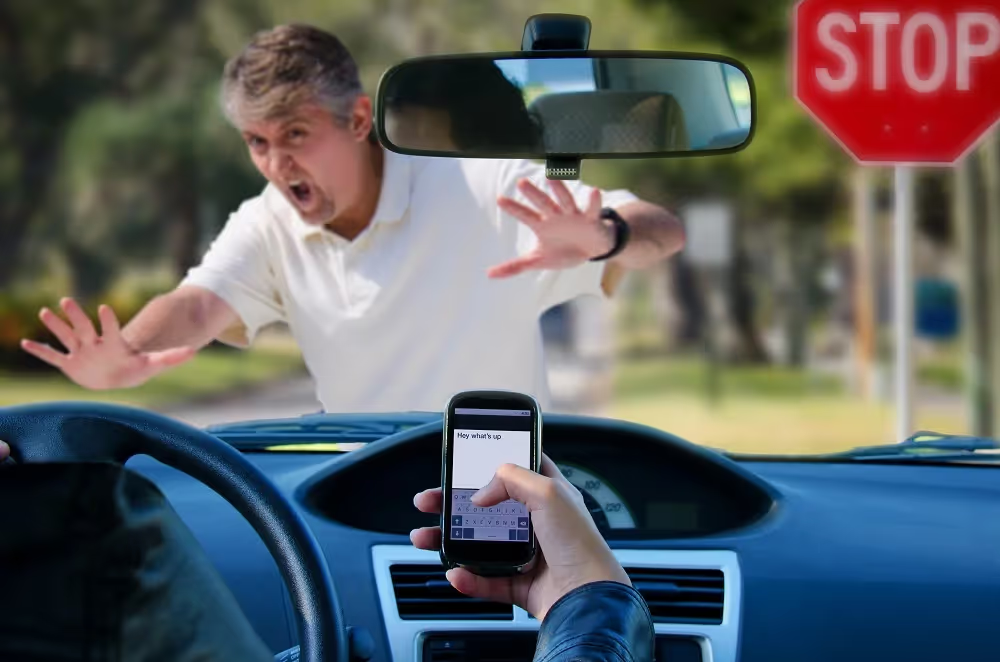
- Distracted driving: Texting, adjusting navigation, or looking away from the road can delay reaction time enough to cause a multi-car collision.
- Speeding: Higher speeds mean longer stopping distances, making it harder to avoid a crash when traffic slows suddenly.
- Poor weather conditions: Rain, fog, snow, and ice reduce visibility and traction on Massachusetts roads, especially on highways like I-93, I-95, Route 128, and the Mass Pike.
- Sudden lane changes: A driver who cuts into traffic without warning can force other vehicles to brake or swerve, setting off a chain reaction.
- Drunk or impaired driving: Intoxicated drivers have slower reaction times and impaired judgment, increasing the risk of causing a pile-up.
- Brake failure or vehicle defects: Mechanical problems, including defective brakes, worn tires, or unsecured commercial vehicle cargo, can trigger multi-car collisions.
- Construction zones: Narrowed lanes, sudden speed reductions, and lane shifts in work zones create conditions where chain-reaction crashes are more likely.
In some cases, a driver who is not even part of the final pile-up can be at fault. A vehicle that cuts off another car and drives away can force the first car to brake hard, starting a chain reaction involving vehicles behind it.
Who Pays for Damages in a Multi-Car Accident
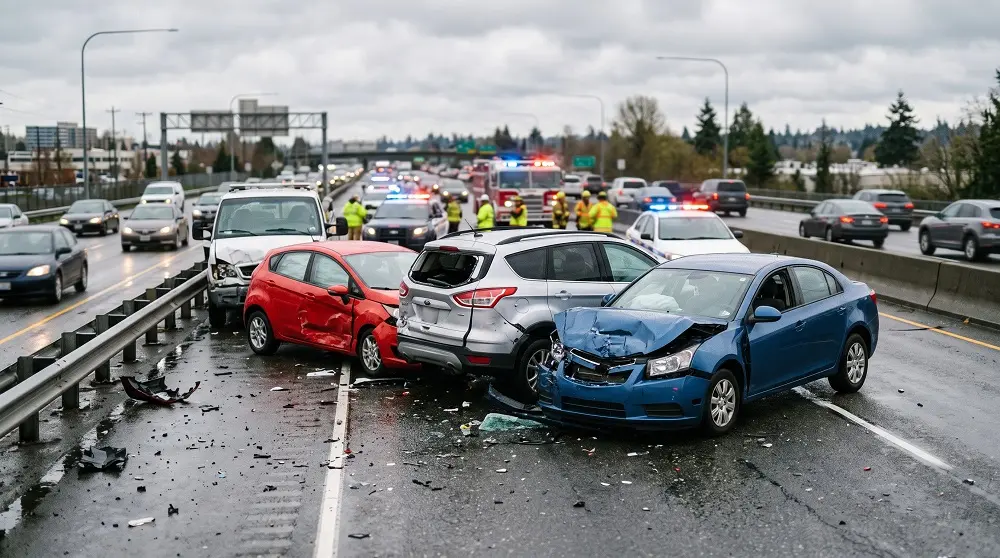
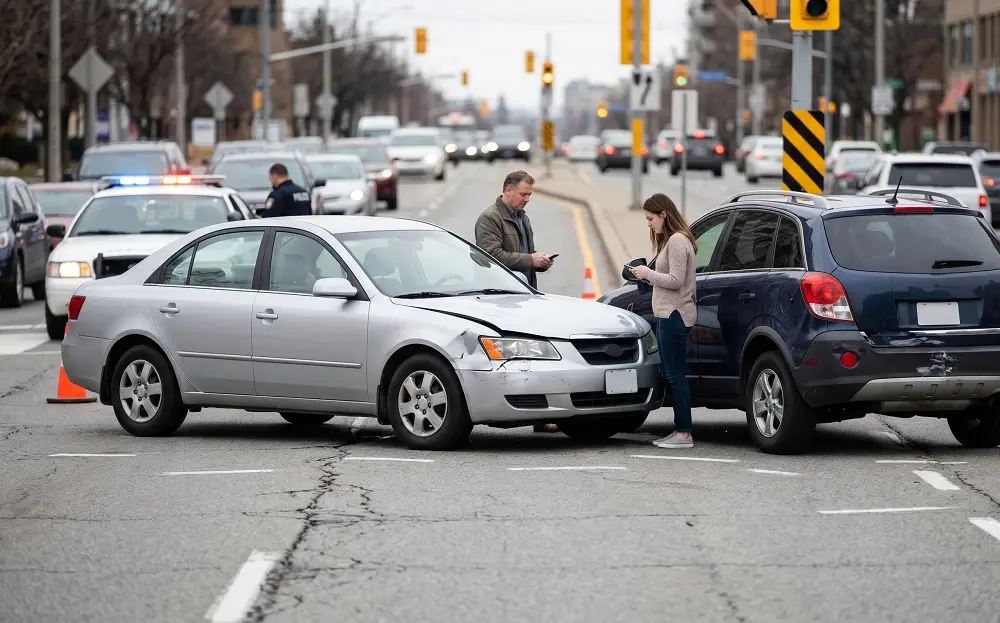
Insurance claims after a multi-car accident are more complicated than a standard two-vehicle crash because multiple insurance companies are involved. Each insurer will investigate independently and try to minimize its policyholder's share of liability.
Massachusetts No-Fault Insurance and PIP
Massachusetts is a no-fault state. After any car accident, including a multi-vehicle pile-up, your own Personal Injury Protection (PIP) coverage pays for medical expenses, up to 75 percent of lost wages, and replacement services up to $8,000 per person, regardless of who caused the crash.
PIP provides immediate benefits, but it does not cover pain and suffering, and the $8,000 cap is often not enough for serious injuries caused by a multi-car collision.
When You Can File a Claim Against At-Fault Drivers
To step outside the no-fault system and pursue a claim against one or more at-fault drivers, your injuries must meet the tort threshold under M.G.L. Chapter 231, Section 6D. This means your reasonable medical expenses must exceed $2,000, or your injuries must include a broken bone (fracture), permanent and serious disfigurement, death, or substantial loss of sight or hearing.
Once you meet this threshold, you can file a third-party claim or lawsuit against any driver whose negligence contributed to the pile-up. In a multi-car accident, this may mean filing claims against multiple drivers and their insurance companies.
Dealing with Multiple Insurance Companies
Each insurance company in a multi-car accident case will conduct its own investigation. Adjusters will review the police report, inspect vehicle damage, and take recorded statements from their policyholders and other drivers involved.
Insurance companies routinely try to shift blame to reduce what they owe. In a four-car crash, each insurer may argue that a different driver was primarily at fault. This kind of finger-pointing can delay your claim and reduce your settlement if you do not have legal representation.
Steps to Protect Your Rights After a Multi-Vehicle Crash
What you do in the hours and days after a multi-car accident can directly affect your ability to recover fair compensation.
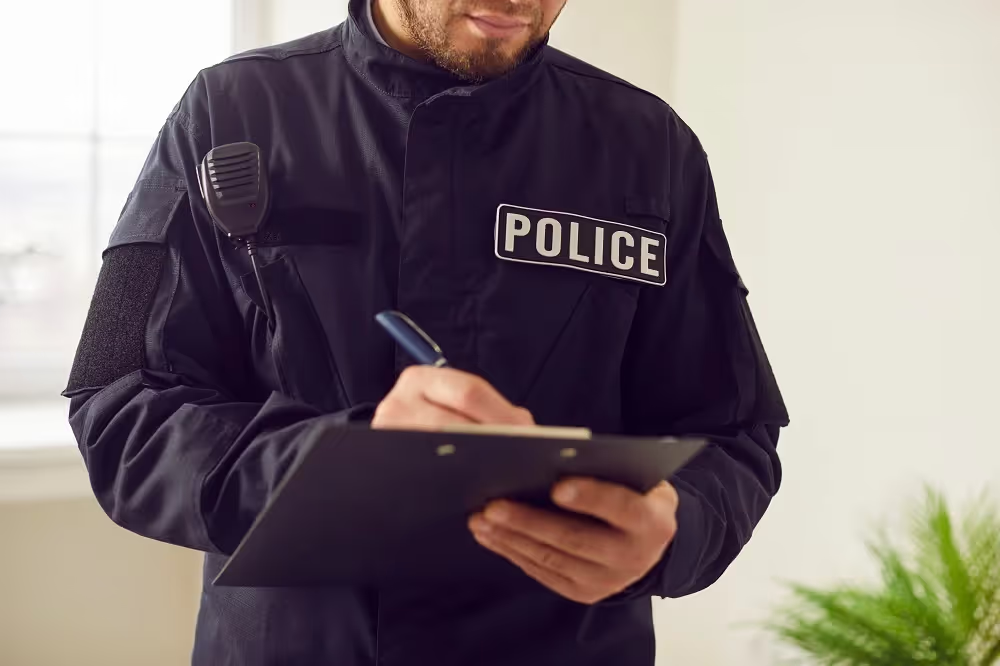
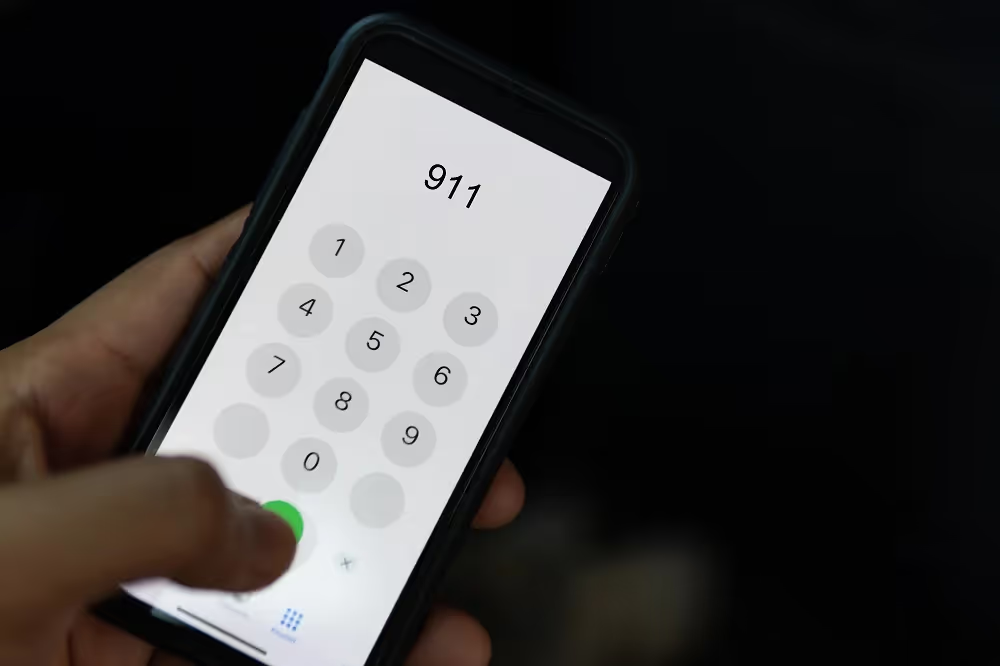
- Call 911 and make sure a police report is filed. Massachusetts law requires a written crash report when someone is injured, killed, or property damage exceeds $1,000.
- Get medical attention immediately. Delayed treatment gives insurance companies a reason to argue that the crash did not cause your injuries.
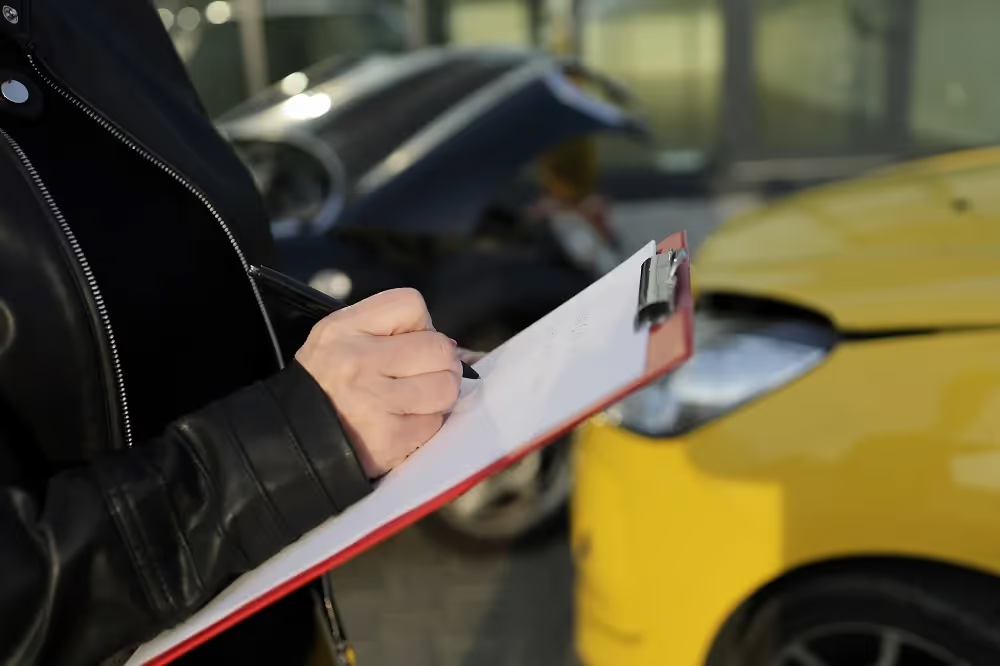
- Document the scene. Photograph every vehicle involved from multiple angles. Capture license plates, skid marks, road debris, traffic signs, weather conditions, and any visible injuries.
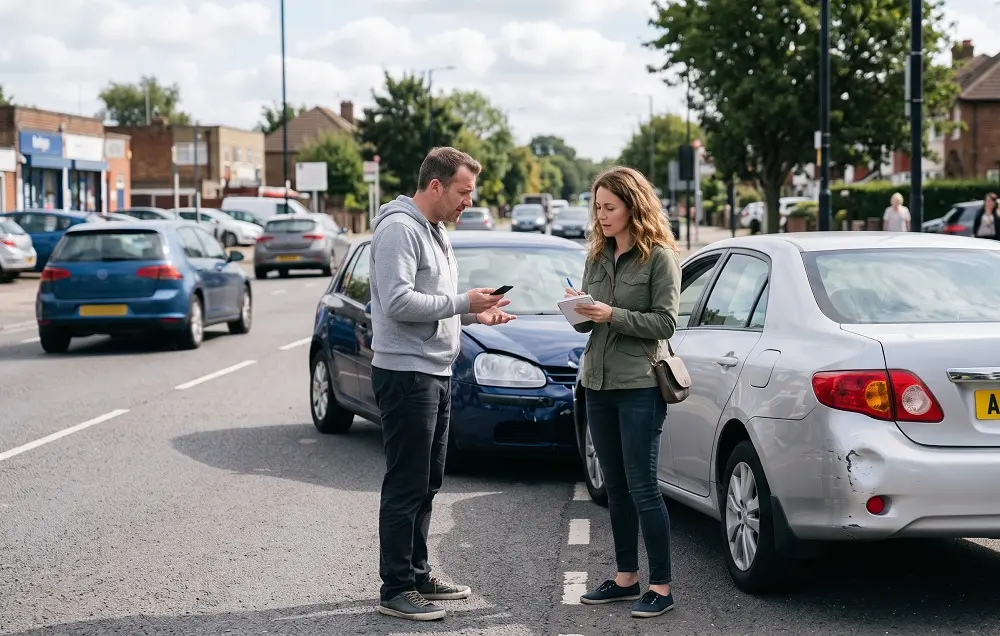
- Collect contact and insurance information from every driver and passenger involved. Write down the names and phone numbers of any witnesses.
- Do not give recorded statements to any insurance company before speaking with a lawyer. Anything you say can be used to increase your percentage of fault.
- Notify your own insurance company about the accident, but keep your statement brief and factual.
- Contact a car accident lawyer. A multi-car pile-up involves complex liability questions that require thorough investigation and legal knowledge.
How a Lawyer Helps After a Multi-Car Pile-Up

Multi-vehicle car accident cases require more investigation, more negotiation, and more legal strategy than a typical two-car crash. When fault is disputed among several drivers and insurance companies, having a lawyer on your side can change the outcome.
An experienced car accident attorney can:
- Investigate the crash scene and identify every potentially liable party.
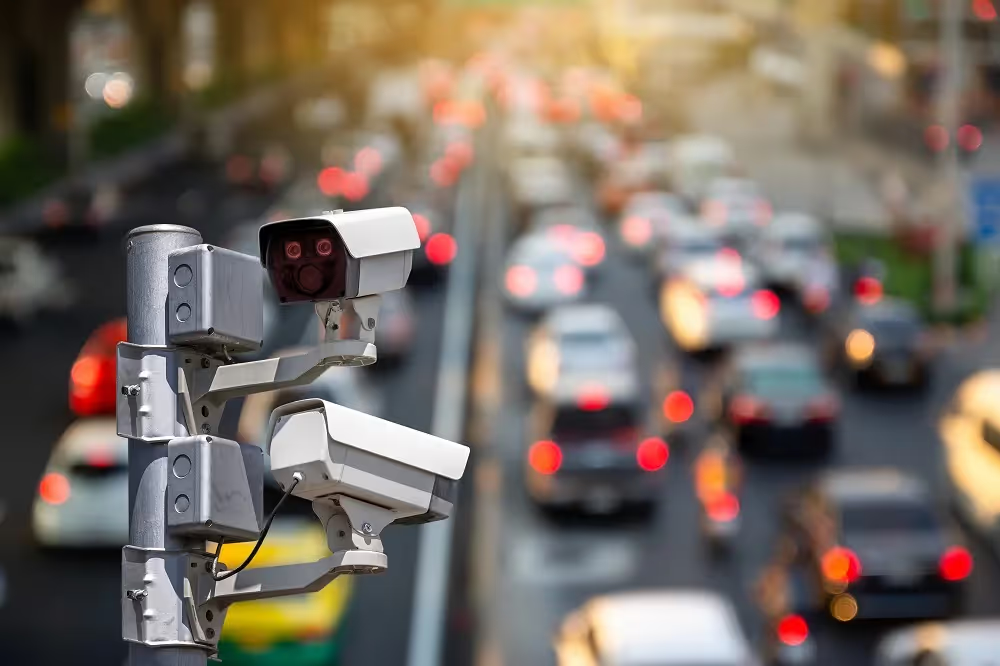
- Obtain and preserve critical evidence, including traffic camera footage, dashcam recordings, EDR data, and 911 dispatch records.
- Work with accident reconstruction professionals to establish the sequence of impacts.
- Handle communications with multiple insurance companies so you do not accidentally hurt your claim.
- Calculate the full value of your injuries, including medical costs, lost wages, pain and suffering, and future care needs.
- Push back against insurers' attempts to inflate your percentage of fault.
- File claims or lawsuits against multiple at-fault drivers when necessary.
Massachusetts personal injury lawsuits are generally subject to a three-year deadline. However, evidence in a multi-car crash can disappear long before that deadline arrives. Acting quickly protects both your evidence and your legal rights to receive compensation for your injuries.
Talk to a Boston Car Accident Lawyer About Your Multi-Car Crash
A multi-car accident can leave you with serious injuries, mounting medical bills, and no clear answer about who should pay. Massachusetts law gives you the right to pursue compensation from every driver whose negligence contributed to the crash, but exercising that right requires solid evidence and a clear legal strategy.
The Law Office of John J. Sheehan has been fighting for injured people in Boston and across Massachusetts since 1993. If you were hurt in a multi-vehicle collision, we can investigate the crash, identify every at-fault party, and work to recover full and fair compensation for your injuries. Contact us today for a free consultation. There is no fee unless we win. Se habla español.

John J. Sheehan
Managing Attorney
Attorney Sheehan is fluent in Spanish and is privileged to represent many clients from the Latin American community in the Greater Boston area.
Caught in a Multi-Car Pile-Up? Don't Let Insurance Companies Decide Your Future.
Get a free consultation with Attorney John J. Sheehan, a Boston car accident lawyer who has fought for injured people across Massachusetts since 1993.

Heading