boston bridge
Boston Personal Injury Lawyer

Boston Traumatic Brain Injury Lawyer

Real Help for Serious Head Injuries

Wins for Our Clients

$1.5 Million

Construction Site Accident

Steel I-beam accident on a construction site, resulting in TBI and thoracic spine fracture, fractured ribs

Steel I-Beam fell from wood framing and fell on welder who suffered a traumatic brain injury (TBI), thoracic spine compression fracture, fractured clavicle, fractured ribs and crushed foot/ankle. Following extensive litigation with the general contractor, subcontractors and suppliers to the job site, case settled at mediation.

$800,000

Trip and Fall at Work

A wire loop hazard on a demolished construction floor caused a trip & fall with a right patella fracture and neck injury

Employee was caused to trip and fall at work on construction site. While walking across demolished floor of building being renovated, employee was caused to trip on a wire loop that was protruding from the demolished concrete floor. Employee was caused to fall forward landing on his knees. Employee sustained multiple injuries including a right patella fracture and neck injury. Eventually, Employee right patellofemoral replacement surgery. MRI of the cervical spine confirmed foraminal narrowing of C5-6 and C6-7 with possible compression of the C6 and C7 nerve roots. Employee filed a lawsuit to pursue third-party personal injury claims against the general contractor, demolition subcontractor and site subcontractor for the construction site where his accident occurred. The workers’ comp claim settled for $350,000 with liability accepted for future medical treatment. The third-party claim settled at mediation with all defendants for $450,000. In addition to the workers’ comp and third-party claims, Employee successfully filed for SSDI benefits.

$700,000

Construction Fall From Ladder

Ladder fall at work, resulting in a fractured and dislocated ankle with talus displacement

Employee was working as a master carpenter when he fell from a ladder and sustained multiple injuries including fractured and dislocated ankle with displacement of the talus. Employee underwent multiple surgeries to treat the ankle fracture including open reduction with internal fixation and hardware removal. Employee developed an infection of the ankle requiring multiple surgeries including skin graft surgeries. Employee developed Complex Regional Pain Syndrome (“CRPS”) of the lower extremity. Employee underwent Spinal Cord Stimulator surgery for chronic pain management related to the CRPS. Workers Comp claim settled prior to a Conference on Employee’s claim for §34A Permanent and Total Incapacity Benefits.

$656,000

Slip and Fall at Construction Site

Carpenter foreman slipped on ice at a construction site, causing an L4–5 herniated disc requiring surgery

Carpenter foreman slipped and fell on ice at construction site. Client injured his lower back and suffered a herniated disc at L4-5 with impingement requiring surgery. Settled workers’ comp claim for $200,000 and third-party claim against general contractor for $456,000.

$625,000

Pedestrian Hit By Car

Pedestrian pinned under a truck, suffering displaced compound tibia/fibula fractures

Pedestrian was standing by his uncle’s landscaping truck that was parked on the side of the road when a car hit the back of the truck and hit the pedestrian pinning him under the landscaping truck. Pedestrian sustained multiple severe and permanent injuries including displaced compound fractures to the tibia and fibula, clavicle fracture and multiple abrasions and contusion. Pedestrian underwent multiple surgeries to repair the fractures and skin grafting. Case settled prior to filing suit.

More Results
$800,000
Trip and Fall at Work

Employee was caused to trip and fall at work on construction site. While walking across demolished floor of building being renovated, employee was caused to trip on a wire loop that was protruding from the demolished concrete floor. Employee was caused to fall forward landing on his knees. Employee sustained multiple injuries including a right patella fracture and neck injury. Eventually, Employee right patellofemoral replacement surgery. MRI of the cervical spine confirmed foraminal narrowing of C5-6 and C6-7 with possible compression of the C6 and C7 nerve roots. Employee filed a lawsuit to pursue third-party personal injury claims against the general contractor, demolition subcontractor and site subcontractor for the construction site where his accident occurred. The workers’ comp claim settled for $350,000 with liability accepted for future medical treatment. The third-party claim settled at mediation with all defendants for $450,000. In addition to the workers’ comp and third-party claims, Employee successfully filed for SSDI benefits.

Table of Contents

    What You Need to Know About Workplace Traumatic Brain Injuries

    A head injury at work can affect memory, focus, mood, balance, sleep, speech, and the ability to return to the same job. Even a concussion can disrupt daily life long after the accident.

    Workers’ compensation may pay medical bills and partial wage benefits. But a third-party claim may also allow recovery for pain and suffering, full wage loss, future medical and therapeutic care, and reimbursement for future reduced earning ability. The CDC reports approximately 214,110 TBI-related hospitalizations in 2020 and 68,663 TBI-related deaths in 2023. Those figures do not include many TBIs treated only in emergency departments, urgent care, primary care, or not treated at all.

    Types of Brain Injury Cases We Handle in Boston

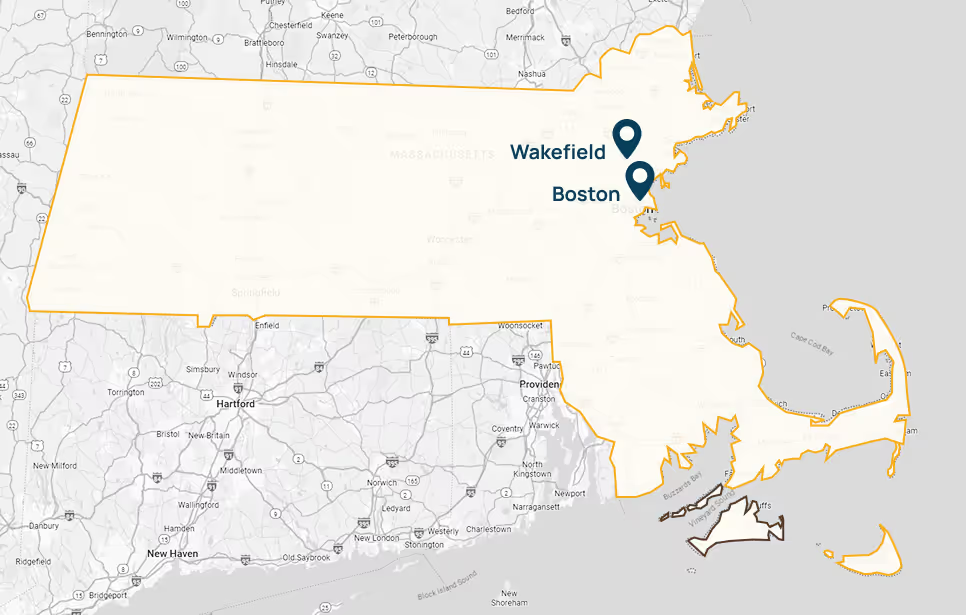
    Attorney John J. Sheehan uses his advanced knowledge to represent workers and accident victims with serious head injuries across Boston and Massachusetts.

    • A concussion may be called “mild” on paper, but the symptoms can interfere with work, driving, sleep, and family life. Headaches, dizziness, light sensitivity, brain fog, and memory issues should not be dismissed.

    • Some people continue to struggle weeks or months after the accident. Ongoing headaches, fatigue, trouble concentrating, irritability, and sleep disruption can affect job performance and earning capacity.

    • A blow to the head can cause bleeding, swelling, or pressure inside the skull. These injuries may require emergency care, imaging, hospitalization, surgery, and long-term follow-up.

    • A fractured skull can involve bleeding, nerve damage, seizures, infection risk, and lasting neurological problems.

    • A serious TBI may cause permanent cognitive, emotional, physical, or speech-related impairments. These cases often require future medical planning, vocational evidence, and strong proof of lost earning capacity.

    • When a workplace accident or third-party act causes a fatal brain injury, the family may have workers’ compensation death-benefit rights and a separate wrongful death claim, depending on the facts.

    Work Accidents Our Boston TBI Lawyer Commonly Handles

    Brain injuries happen in many types of workplace and construction accidents, including:

    • Falls from heights: aLadders, roofs, scaffolds, staging, lifts, and unprotected edges;
    • Falling objects: Tools, beams, debris, building materials, and unsecured loads;
    • Struck-by equipment accidents: Forklifts, loaders, cranes, trucks, and jobsite machinery;
    • Work-related vehicle crashes: Delivery routes, construction vehicles, company cars, and third-party drivers;
    • Slips, trips, and falls: Wet floors, ice, debris, uneven surfaces, and unsafe walkways;
    • Workplace assaults: Blows to the head during a job-related assault;
    • Equipment failures: Defective ladders, scaffolds, helmets, lifts, machinery, or safety gear.

    NIOSH reports that work-related TBIs account for 20% to 25% of work-related trauma and that the construction industry has the greatest number of fatal and nonfatal work-related TBIs among U.S. workplaces.

    NIOSH also notes that construction workers face TBI risks from falling or flying objects and falls from elevation, with falls from roofs, ladders, and scaffolds leading to more than half of fatal work-related TBIs.

    Symptoms Are Evidence. Start Tracking Them Now.

    Headaches, dizziness, memory problems, mood changes, sleep issues, and confusion can shape the value of a TBI claim. A traumatic brain injury lawyer in Boston can help document symptoms before the injurer argues they are unrelated.

    Free Consultation
    Call 24/7 for a Free Case Review
    phone icon
    (781) 242-4100

    Your Two Legal Pathways: Workers’ Compensation AND Third-Party Claim Lawsuits

    A workplace TBI may involve more than one claim. If the injury occurred while on the clock, workers’ compensation can provide medical care and some wage benefits. A third-party lawsuit, however, may be available when someone other than your direct employer caused or contributed to the accident.

    Workers’ Compensation Third-Party Lawsuit
    Filed through the employer’s workers’ comp insurer Filed against a negligent contractor, property owner, driver, equipment company, or other outside party
    No-Fault based — no need to prove employer fault Fault-based — requires proof of negligence, unsafe conduct, or legal responsibility
    Pays reasonable and necessary medical care Can include full medical damages, future care, pain and suffering, and loss of earning capacity
    Pays partial wage replacement Can pursue broader financial losses
    Does not pay pain and suffering Can include pain and suffering, plus loss of consortium money damages for your spouse
    Often starts sooner May take longer, but can provide a full financial recovery

    Massachusetts law (Section 30) requires the workers’ compensation insurer to furnish adequate and reasonable health care services and needed medicines for an injured employee.

    If the injury was caused by someone other than the insured employer, though, Massachusetts law (Section 15) allows the employee to receive workers’ compensation benefits and also pursue liability against that outside party.

    Who Can Be Liable for a Workplace TBI

    A third-party claim may involve:

    • General contractors
    • Subcontractors
    • Property owners
    • Equipment manufacturers
    • Equipment rental companies
    • Maintenance companies
    • Delivery drivers or commercial vehicle companies
    • Other contractors on the jobsite

    This is where an experienced Boston brain injury lawyer can make a major difference: the attorney must separate what workers’ comp pays from what a third-party lawsuit may recover.

    When Safety Failures Cause Brain Injuries

    Many TBIs are preventable. A fall, a falling object, a missing guardrail, an unsafe scaffold, a defective ladder, an unmarked floor opening, or a poorly controlled work zone can leave a worker with lifelong symptoms.

    A traumatic brain injury lawyer in Boston will look for:

    • Missing or defective fall protection
    • Unsafe scaffolds, ladders, lifts, or platforms
    • Unguarded holes or floor openings
    • Falling-object hazards
    • Missing helmets or wrong helmet type
    • Lack of site supervision
    • Unsafe work sequencing between trades
    • Defective tools, machinery, or equipment
    • Prior complaints or ignored hazards
    • OSHA reports, photos, witness accounts, and safety records

    The goal is to connect the injury to the safety failure and identify every party that had the power to prevent the accident.

    Brain Injury Symptoms That Should Be Documented

    TBI symptoms can appear right away or hours or days later. The CDC states that mild TBI and concussion symptoms may affect how a person feels, thinks, acts, or sleeps.

    Document symptoms such as:

    • Headaches
    • Dizziness or balance problems
    • Vision problems
    • Nausea or vomiting
    • Fatigue
    • Light or noise sensitivity
    • Trouble concentrating
    • Memory problems
    • Brain fog
    • Slowed thinking
    • Irritability
    • Anxiety
    • Mood changes
    • Sleep problems
    • Slurred speech
    • Seizures
    • Confusion or unusual behavior

    Emergency care is needed for danger signs such as a worsening headache that won’t go away, repeated vomiting, seizures, weakness, numbness, slurred speech, unusual behavior, confusion, loss of consciousness, or inability to wake up.

    Find Out Who Had the Power to Prevent the Accident

    Struggling with a brain injury? Our experienced Boston traumatic injury attorney operates on a contingency basis, so you pay nothing unless we win compensation for you.


    Free Consultation
    Call 24/7 for a Free Case Review
    phone icon
    (781) 242-4100

    Real Stories from real clients

    More Client Testimonials
    Video thumb
    Video thumb
    Video thumb
    Video thumb
    Video thumb
    Video thumb
    Video thumb
    Video thumb
    Video thumb
    Video thumb
    Video thumb
    Video thumb
    Video thumb
    Video thumb
    Video thumb
    Video thumb
    Video thumb
    Video thumb
    Video thumb
    Video thumb
    Video thumb
    Video thumb
    Video thumb
    Video thumb
    Video thumb
    Video thumb
    Video thumb
    Video thumb
    Video thumb
    Video thumb
    Video thumb
    Video thumb
    Video thumb
    Video thumb
    Video thumb
    Video thumb
    Video thumb
    Video thumb
    Video thumb
    Video thumb
    Video thumb
    Video thumb
    Video thumb
    Video thumb
    Video thumb
    Video thumb
    Video thumb
    Video thumb
    Video thumb
    Video thumb
    Video thumb
    Video thumb
    Video thumb

    How We Build Brain Injury Claims Insurers Try to Shrink

    • Step
      1

      Our Boston traumatic injury lawyers look at the force behind the injury: a fall, a falling object, a vehicle crash, an equipment strike, a ladder collapse, or an unsafe jobsite situation. The accident details help show why the injury is serious, even if the first diagnosis says “concussion”.

    • Step
      2

      Brain injury symptoms can appear or worsen over days. We track headaches, dizziness, memory issues, sleep problems, mood changes, confusion, and trouble concentrating from the first report through follow-up treatment.

    • Step
      3

      The question is not only “What did the doctor diagnose?” It is also “What can you no longer do?” Our traumatic injury lawyers document missed work, job restrictions, reduced earning capacity, safety risks, and your ability to return to the same work.

    • Step
      4

      Workers’ comp may cover medical care and part of your wages. But if a contractor, property owner, driver, equipment company, or subcontractor caused the accident, our Boston traumatic injury lawyers also look for a third-party claim that may pay for pain and suffering and future losses.

    • Step
      5

      Photos, videos, witness names, incident reports, equipment records, and jobsite conditions can vanish quickly. Our traumatic injury lawyers in Boston move early so the insurer does not control the story.

    Our Legal Process

    Meet Our Team

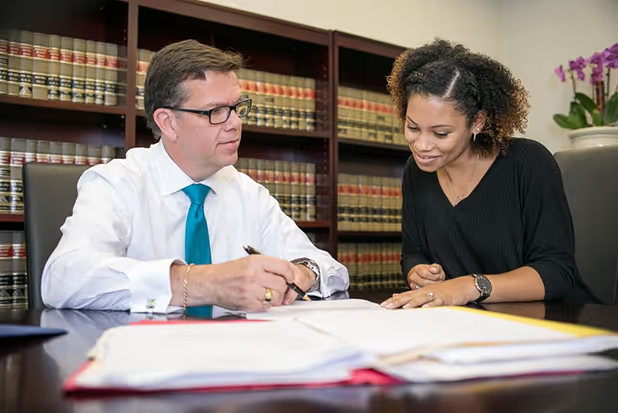
    Since 1993, Attorney John Sheehan has represented injured workers and accident victims across Massachusetts, fighting for justice against powerful insurers and corporations. Fluent in Spanish and deeply involved in Boston’s Hispanic community, John has earned a reputation for listening, explaining complex legal matters, and securing maximum compensation for his clients.

    Behind John is a strong team of legal professionals who share one goal: providing each client with direct counsel and relentless advocacy. With decades of legal experience, we approach each case with the understanding that every injury and every person is unique.

    Learn More John J. Sheehan
    John J. Sheehan

    John J. Sheehan

    Managing Attorney

    Frequently Asked Questions About Boston Traumatic Brain Injury Claims

    • “Mild” is a medical category, not a description of how the injury feels in real life. A so-called mild TBI can still cause headaches, memory problems, dizziness, sleep disruption, mood changes, and trouble working. The claim should focus on what changed after the accident, not just the label in the first medical note.

    • That can happen with head injuries. Many people feel shocked, embarrassed, or determined to keep working right after the accident. Symptoms may become clearer after the first night, the first work shift, or the first time you try to drive, read, climb, lift, or follow instructions. Report the change to a doctor and tell your lawyer when each symptom started.

    • Yes. Loss of consciousness can support a brain injury claim, but it is not required. Many concussion and TBI cases involve confusion, dizziness, memory gaps, nausea, balance problems, or changes in behavior without a full blackout.

    • A CT scan or MRI may rule out bleeding, swelling, or fracture, but it does not always capture the full effect of a concussion or mild TBI. Medical records, specialist evaluations, neuropsychological testing, work restrictions, family observations, and symptom history may still support the claim.

    • Yes, if the symptoms are tied to the work injury. The insurer may dispute the connection, especially if the first medical record is vague. That is why it helps to report every symptom clearly and consistently: headaches, dizziness, confusion, memory issues, vision problems, sleep changes, mood changes, and trouble concentrating.

    • The value usually rises when the injury affects long-term work ability, requires ongoing treatment, causes permanent symptoms, prevents a return to the same job, or supports a third-party claim against someone besides the employer. Future medical care and reduced earning capacity can become major parts of the case.

    • Track symptoms daily. Include headaches, dizziness, nausea, sleep, memory mistakes, mood changes, missed work, trouble driving, trouble reading, and anything your family notices. Also, keep accident reports, medical notes, work restrictions, pay records, and names of witnesses.

    • Yes. Immigration status does not erase the right to pursue workers’ compensation after a job injury. The project plan also identifies this as a key issue for Spanish-speaking construction workers and notes that immigration status does not affect eligibility for workers’ comp or the right to pursue a personal injury claim.

    The Injury Is in Your Head. The Financial Damage Is Everywhere.

    A traumatic brain injury can affect your paycheck, your medical care, your memory, your ability to pay your bills and put food on your family’s table, and your entire future. Attorney John J. Sheehan will use his advanced knowledge and skill to build a claim that accounts for the full impact — not just the first emergency room bill.

    Correct First Name is Required
    Correct Last Name is Required
    Correct Phone is Required
    Correct Email is Required

    By providing your phone number, you agree to receive informational text messages from The Law Office of John J. Sheehan. Consent is not a condition of purchase. Message frequency will vary. Msg & data rates may apply. Reply HELP for help or STOP to cancel.

    Thank you! Your submission has been received!
    Oops! Something went wrong while submitting the form.