

Catastrophic Injuries from Fire and Explosion Accidents
Attorney John J. Sheehan represents Massachusetts construction workers and industrial employees who suffer devastating burn injuries and explosion trauma on the job.
Workplace fires and explosions cause some of the most severe, life-altering injuries a worker can experience. A welding spark ignites flammable materials. A gas line ruptures and explodes. An electrical arc flash erupts in a confined space. In seconds, workers face catastrophic burns, permanent scarring, smoke inhalation damage, and blast trauma that changes everything.
When fire or explosion accidents occur on construction sites in Massachusetts or in industrial facilities, injured workers often don't realize they have legal rights beyond basic workers' compensation. Attorney Sheehan's dual-track legal strategy secures workers' comp medical benefits while pursuing third-party lawsuits against general contractors, equipment manufacturers, property owners, and other negligent parties whose safety violations caused the fire or explosion.
Common Fire and Explosion Scenarios
- Welding and Hot Work Accidents — Sparks ignite combustible materials when contractors fail to obtain hot work permits or skip required fire watch procedures.
- Gas Line Ruptures and Explosions — Excavation crews strike unmarked gas lines or defective gas equipment leaks, and ignites.
- Electrical Arc Flash Incidents — Electrical work on energized equipment causes explosive energy releases exceeding 35,000 degrees.
- Confined Space Fires — Flammable vapors accumulate in tanks, manholes, or crawl spaces and ignite from a single spark.
- Defective Equipment Fires — Faulty welding torches, defective propane heaters, or malfunctioning electrical tools cause fires and explosions.
- Construction Site Storage Violations — Improper storage of flammable materials near ignition sources creates explosive conditions.
Fire and explosion cases require immediate investigation before evidence disappears and detailed medical documentation of the full scope of catastrophic injuries. Attorney Sheehan's 30+ years of successfully handling workplace injury claims mean he knows what evidence to preserve and how to build cases that maximize compensation.
Injuries That Change Lives Forever
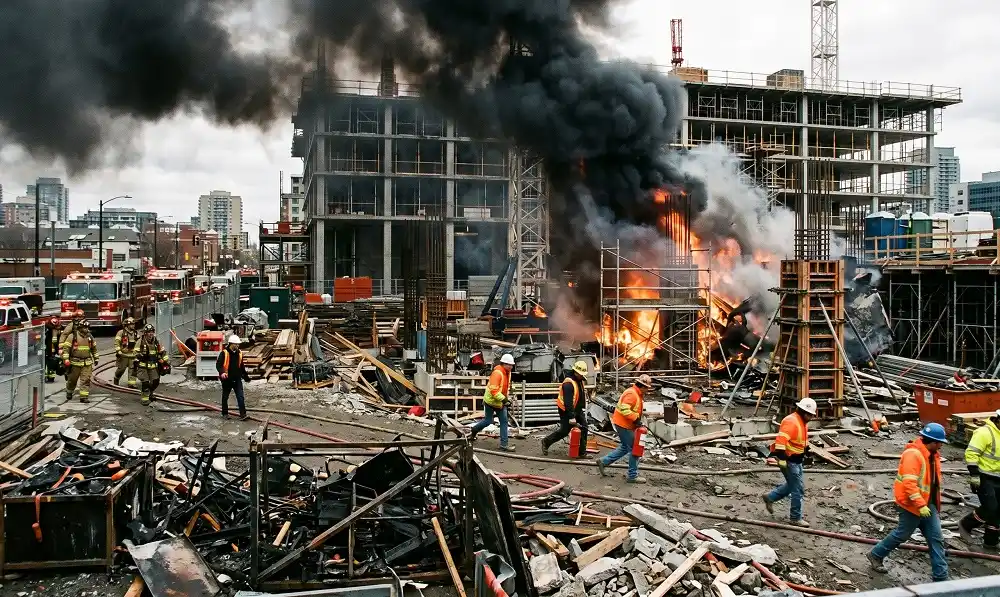
Attorney Sheehan fights for workers suffering catastrophic burn injuries and explosion trauma:
First-degree burns heal within weeks, but second-degree burns cause painful blistering and potential scarring. Third-degree burns destroy all skin layers, requiring skin grafts and reconstructive surgery. Fourth-degree burns extend through muscle to bone, often necessitating amputation. Massachusetts construction workers who suffer severe burns face immediate medical emergencies and long-term consequences that workers' compensation alone cannot adequately address.
Facial burns, neck scarring, and hand disfigurement affect workers' ability to return to their communities and find future employment. Reconstructive surgery improves appearance but rarely eliminates visible scarring. The emotional toll of permanent disfigurement requires compensation for pain, suffering, and reduced quality of life that workers' comp doesn't provide.
The concussive force from workplace explosions causes traumatic brain injury, ruptured eardrums, lung damage, and internal bleeding. Secondary blast effects occur when explosions propel metal fragments, glass, and debris into workers' bodies. Tertiary blast injuries result when explosions throw workers against walls or equipment. These multiple traumatic injuries require comprehensive medical treatment and create permanent disabilities.
Smoke inhalation can burn the airways and lungs. Toxic fumes from burning plastics and chemicals poison the bloodstream and damage lung tissue. Workers trapped in enclosed spaces during fires suffer the most severe inhalation injuries, leading to chronic respiratory problems and reduced lung capacity that prevents future physical labor.
Some Massachusetts workers never recover from fire and explosion accidents. When workplace fires and explosions prove fatal, wrongful death claims compensate families for funeral expenses, lost financial support, and loss of companionship. While no amount of money replaces a loved one, wrongful death compensation provides essential financial security for surviving spouses, children, and dependent family members.
Suffered Burn Injuries or Explosion Trauma at Work?
Get your free consultation with Boston's workers' compensation and personal injury lawyer.

Who Can Be Held Liable for Your Fire or Explosion Injuries
Attorney Sheehan investigates all potential defendants to maximize your compensation:
Workers' Compensation Benefits (From Your Employer's Insurance)
Massachusetts workers' comp provides medical expense coverage, disability benefits at 60% of your average weekly wage, and specific compensation for permanent scarring and disfigurement. These benefits are available regardless of who caused the accident or your immigration status. Attorney-client privilege protects all information you share about your work authorization when you hire Attorney Sheehan.
Third-Party Personal Injury Claims (Full Compensation)
When parties other than your direct employer cause fire or explosion accidents, you can sue them for complete damages, including pain and suffering, full lost wages, and compensation for permanent disabilities. These third-party claims often result in substantially higher compensation than workers' comp alone.
- General Contractors and Subcontractors — On multi-employer construction sites, the general contractor must coordinate safety efforts and ensure all subcontractors comply with OSHA fire-prevention regulations. If you worked for one subcontractor and another contractor's negligence caused the fire or explosion, you can sue that negligent contractor. Common violations include failure to enforce hot work permits, inadequate fire extinguisher placement, and improper coordination of welding operations near flammable materials.
- Equipment Manufacturers — Defective welding equipment, faulty propane tanks, malfunctioning electrical tools, and defective safety gear cause fires and explosions even when workers follow all safety protocols. Product liability claims against manufacturers don't require proof of negligence, only that the product was defective and caused your injuries.
- Property Owners — Building owners who ignore the accumulation of combustible materials, fail to maintain fire suppression systems, or create hazardous conditions can be held liable when their negligence injures workers employed by contractors. This is particularly common in renovation projects where property owners maintain control over site safety.
- Utility Companies — Gas line explosions resulting from utility company negligence create third-party liability. When utilities fail to properly mark underground gas lines, maintain defective gas meters, or respond inadequately to leak reports, they're liable for all resulting injuries and deaths.
- Electrical Contractors and Engineers — Arc flash incidents and electrical fires often result from improper electrical work by other contractors. When electrical contractors fail to de-energize equipment, violate National Electrical Code standards, or create unsafe electrical conditions, they're liable to workers from other companies who suffer injuries as a result.
OSHA Violations Strengthen Your Case
OSHA investigates serious workplace fires and explosions and issues citations for safety violations. These citations provide powerful evidence in third-party lawsuits. Common OSHA violations include failure to implement fire prevention programs under 29 CFR 1926.352, inadequate fire protection equipment under 29 CFR 1926.150, improper storage of flammable materials under 29 CFR 1926.152, and violations of confined space entry under 29 CFR 1926.1200.
Attorney Sheehan obtains complete OSHA investigation files and uses violation citations to prove third-party defendants breached recognized safety standards.
Compensation for Fire and Explosion Injuries

Attorney Sheehan pursues maximum recovery through both workers' compensation and third-party claims:
Workers' Compensation Benefits (Immediate Support)
- All Medical Treatment — Emergency care, burn unit hospitalization, skin grafts, reconstructive surgery, and ongoing therapy;
- Disability Benefits — 60% of the average weekly wage while unable to work;
- Permanent Disability Compensation — Benefits for lasting impairments that prevent future employment;
- Scarring and Disfigurement Benefits — Specific compensation for permanent facial, neck, and hand scarring;
- Vocational Rehabilitation — Job retraining if you cannot return to construction work.
Third-Party Personal Injury Damages (Full Compensation)
- 100% Lost Wages — Not limited to 60% like workers' comp;
- Pain and Suffering — Compensation for physical pain from burns and ongoing treatment agony;
- Emotional Distress — Anxiety, depression, and PTSD following traumatic accidents;
- Permanent Disfigurement — Compensation for living with visible scarring that affects personal and professional life;
- Loss of Life Enjoyment — Inability to participate in activities you previously enjoyed;
- Future Medical Expenses — Full cost of lifetime medical care needs;
- Loss of Earning Capacity — Compensation for reduced lifetime earnings due to permanent disabilities;
- Family Impact — Spouse's loss of consortium claim for loss of companionship and services.
Real Example: A construction worker with severe burn injuries might receive $200,000 in lifetime workers' compensation benefits. The same injury in a successful third-party claim could yield $1 million to $2 million, covering their complete lost wages, pain and suffering, permanent disfigurement, and family impact.
Get Your Free Case Review Now