boston bridge
Boston Personal Injury Lawyer

Boston Strain Injury Lawyer

When the Job Turns Pain into Lost Pay

Won for Our Clients

$1.5 Million

Construction Site Accident

Steel I-beam accident on a construction site, resulting in TBI and thoracic spine fracture, fractured ribs

Steel I-Beam fell from wood framing and fell on welder who suffered a traumatic brain injury (TBI), thoracic spine compression fracture, fractured clavicle, fractured ribs and crushed foot/ankle. Following extensive litigation with the general contractor, subcontractors and suppliers to the job site, case settled at mediation.

$800,000

Trip and Fall at Work

A wire loop hazard on a demolished construction floor caused a trip & fall with a right patella fracture and neck injury

Employee was caused to trip and fall at work on construction site. While walking across demolished floor of building being renovated, employee was caused to trip on a wire loop that was protruding from the demolished concrete floor. Employee was caused to fall forward landing on his knees. Employee sustained multiple injuries including a right patella fracture and neck injury. Eventually, Employee right patellofemoral replacement surgery. MRI of the cervical spine confirmed foraminal narrowing of C5-6 and C6-7 with possible compression of the C6 and C7 nerve roots. Employee filed a lawsuit to pursue third-party personal injury claims against the general contractor, demolition subcontractor and site subcontractor for the construction site where his accident occurred. The workers’ comp claim settled for $350,000 with liability accepted for future medical treatment. The third-party claim settled at mediation with all defendants for $450,000. In addition to the workers’ comp and third-party claims, Employee successfully filed for SSDI benefits.

$700,000

Construction Fall From Ladder

Ladder fall at work, resulting in a fractured and dislocated ankle with talus displacement

Employee was working as a master carpenter when he fell from a ladder and sustained multiple injuries including fractured and dislocated ankle with displacement of the talus. Employee underwent multiple surgeries to treat the ankle fracture including open reduction with internal fixation and hardware removal. Employee developed an infection of the ankle requiring multiple surgeries including skin graft surgeries. Employee developed Complex Regional Pain Syndrome (“CRPS”) of the lower extremity. Employee underwent Spinal Cord Stimulator surgery for chronic pain management related to the CRPS. Workers Comp claim settled prior to a Conference on Employee’s claim for §34A Permanent and Total Incapacity Benefits.

$656,000

Slip and Fall at Construction Site

Carpenter foreman slipped on ice at a construction site, causing an L4–5 herniated disc requiring surgery

Carpenter foreman slipped and fell on ice at construction site. Client injured his lower back and suffered a herniated disc at L4-5 with impingement requiring surgery. Settled workers’ comp claim for $200,000 and third-party claim against general contractor for $456,000.

$625,000

Pedestrian Hit By Car

Pedestrian pinned under a truck, suffering displaced compound tibia/fibula fractures

Pedestrian was standing by his uncle’s landscaping truck that was parked on the side of the road when a car hit the back of the truck and hit the pedestrian pinning him under the landscaping truck. Pedestrian sustained multiple severe and permanent injuries including displaced compound fractures to the tibia and fibula, clavicle fracture and multiple abrasions and contusion. Pedestrian underwent multiple surgeries to repair the fractures and skin grafting. Case settled prior to filing suit.

More Results
$800,000
Trip and Fall at Work

Employee was caused to trip and fall at work on construction site. While walking across demolished floor of building being renovated, employee was caused to trip on a wire loop that was protruding from the demolished concrete floor. Employee was caused to fall forward landing on his knees. Employee sustained multiple injuries including a right patella fracture and neck injury. Eventually, Employee right patellofemoral replacement surgery. MRI of the cervical spine confirmed foraminal narrowing of C5-6 and C6-7 with possible compression of the C6 and C7 nerve roots. Employee filed a lawsuit to pursue third-party personal injury claims against the general contractor, demolition subcontractor and site subcontractor for the construction site where his accident occurred. The workers’ comp claim settled for $350,000 with liability accepted for future medical treatment. The third-party claim settled at mediation with all defendants for $450,000. In addition to the workers’ comp and third-party claims, Employee successfully filed for SSDI benefits.

Table of Contents

    A Work Strain Claim Needs More Than a Pain Complaint

    A broken bone is easy to see. Just hold up an X-ray. A torn muscle, damaged tendon, neck strain, back strain, shoulder injury, or repetitive stress condition can be harder to prove because the damage may not show clearly on an X-ray. That does not make the injury small.

    Insurance companies often treat strain claims like ordinary soreness. They may say the pain came from age, home chores, weekend activity, prior injuries, or “normal wear and tear”. The worker is left with the burden of proving the connection to the job.

    That proof usually starts with the work itself:

    • What task hurts you?
    • What body part changed?
    • What job duties became unsafe?
    • Who heard you report it?
    • What did the first medical note say?
    • What restrictions kept you from earning your usual pay?

    Our strain injury lawyers in Boston can turn those details into a claim that the insurer cannot brush aside with a single vague denial.

    Strain and Repetitive Stress Cases Attorney Sheehan Handles

    A strain injury may result from a single bad moment, repeated damage over time, or a work-related flare-up of an existing condition. The legal fight is often less about the medical label and more about the job facts.

    • A low-back strain can make basic job duties impossible: lifting, bending, carrying, climbing, standing, driving, pushing, pulling, or getting through a full shift. Insurers often attack back claims by pointing to age, prior pain, or “degeneration”. The claim needs a clean record showing which job task caused the condition to become disabling.

    • A neck or upper back injury can result from a fall, a sudden pull, an awkward lift, an equipment jolt, or repeated overhead work. Pain can travel into the shoulder, arm, or hand. A worker may lose the ability to drive safely, wear gear, operate tools, or keep pace with crew demands.

    • Shoulder strain claims often involve overhead work, carrying materials, pulling cable, loading trucks, painting, drywall, demolition, stocking, or using heavy tools. These cases can become serious when a worker cannot reach, lift, brace, climb, or sleep without pain.

    • Repeated gripping, twisting, scanning, typing, cutting, sanding, sorting, or tool vibration can cause tendon pain, numbness, weakness, swelling, or loss of grip. A repetitive stress claim often needs a detailed work history because there may be no single accident date.

    • A lower-body strain can start with a slip, a stair carry, an uneven surface, an awkward crouch, a kneeling job, a ladder task, or long shifts on hard floors. These injuries can block standing work, route work, construction work, warehouse work, and jobs that require stairs or ladders.

    • A previous sore back, bad shoulder, knee issue, or wrist problem does not erase a new claim. Work can aggravate an old condition, make symptoms permanent, or turn a manageable issue into a wage-loss injury.

    Work Conditions That Cause Strain Injuries in Boston

    Strain and repetitive stress injuries often come from job demands that look routine until the body gives out.

    • Heavy material handling. Workers may strain their back, shoulders, arms, or legs while lifting lumber, drywall, pipe, masonry, trash barrels, appliances, boxes, tools, furniture, or medical equipment.
    • Overhead labor. Electricians, painters, HVAC workers, drywall crews, maintenance workers, and warehouse employees may suffer shoulder, neck, and back injuries from repeated work above shoulder level.
    • Forceful pushing and pulling. Carts, pallet jacks, wheelbarrows, doors, cables, hoses, machinery, and stuck materials can cause sudden soft-tissue damage.
    • Vibrating and impact tools. Jackhammers, drills, grinders, saws, compactors, and similar tools can contribute to hand, wrist, elbow, shoulder, neck, and back conditions.
    • Awkward work positions. Twisting, crouching, kneeling, crawling, reaching, leaning, and working in tight spaces can overload muscles and tendons.
    • High-speed repetitive tasks. Packing, sorting, scanning, assembly, food prep, stocking, cleaning, keyboard work, and machine operation can create a work injury over time.
    • Short staffing and rushed schedules. A worker may be forced to lift alone, skip breaks, carry too much, or repeat the same task longer than the body can handle.
    • Unsafe walking surfaces. Ice, water, debris, cords, uneven flooring, unmarked holes, and poor lighting can cause a sudden twist, catch, or fall.

    We Know What Insurers Look For and What They Try to Ignore

    Photos, witness names, medical notes, pay records, schedules, and work restrictions can change the direction of a claim. Our team helps gather the proof before it disappears or gets twisted.

    Free Consultation
    Call 24/7 for a Free Case Review
    phone icon
    (781) 242-4100

    Workers’ Comp May Not Be the Only Claim

    A workplace strain injury may begin with workers’ compensation. Some cases also support a third-party claim when someone outside the direct employer helped cause the unsafe condition.

    Workers’ Comp Claim Third-Party Claim
    Filed through the employer’s workers’ compensation insurance. Filed against an outside company or person.
    Employer carelessness need not be shown. Legal fault must be proven.
    May pay for medical treatment tied to the work injury. May seek broader damages tied to the injury.
    May pay partial wage replacement. May seek full wage loss and reduced earning power.
    Does not pay pain and suffering. May include pain and suffering.
    Often starts sooner. Often needs deeper investigation and litigation pressure.

    Massachusetts law requires the workers’ compensation insurer to furnish adequate and reasonable health care services and needed medicine for an injured employee.

    Massachusetts law also allows an injured worker to receive workers’ compensation benefits and pursue damages from a legally responsible outside party when someone other than the insured employer caused the injury.

    Outside Parties That May Share Legal Responsibility

    A strain injury may seem like a simple workers’ comp case at first. The facts may show that another company made the job unsafe.

    • General contractors may be responsible for unsafe sequencing, poor site control, rushed schedules, or missing safety planning.
    • Subcontractors may leave debris, cords, tools, materials, holes, or unsafe access paths that cause a worker to twist, slip, catch, or fall.
    • Property owners may fail to correct ice, broken flooring, poor lighting, bad stairs, unsafe loading areas, or other hazards.
    • Equipment rental companies may supply broken carts, lifts, hoists, pallet jacks, ladders, or platforms.
    • Manufacturers may be responsible for defective tools, unsafe machinery, missing guards, or bad safety instructions.
    • Delivery companies or drivers may cause a crash, loading injuries, dock injuries, or sudden movements that strain the worker’s body.
    • Maintenance vendors may fail to repair doors, docks, elevators, gates, carts, or mechanical systems.

    Our Boston strain injury attorney will search for every party that had control over the task, equipment, work area, or schedule.

    Why Insurers Fight Strain and Repetitive Stress Claims

    Insurers deny these claims because soft-tissue injuries are easy to minimize on paper. They may argue that you are older, out of shape, injured at home, exaggerating, or dealing with a pre-existing condition.

    A strong claim answers those arguments with proof:

    • Job-duty proof: What you lifted, carried, pushed, pulled, repeated, climbed, or operated.
    • Timing proof: When symptoms began, when you reported them, and when you sought care.
    • Medical proof: Diagnosis, treatment plan, restrictions, therapy notes, and specialist opinions.
    • Wage proof: Missed shifts, reduced hours, lost overtime, lighter duty, or job loss.
    • Witness proof: Coworkers, supervisors, route partners, foremen, or family members who saw the change.
    • Scene proof: Photos, video, work orders, broken equipment, job tickets, delivery logs, or safety records.

    The goal is direct: show that the job caused real physical damage and real financial loss.
    The Paper Trail That Makes a Strain Claim Stronger

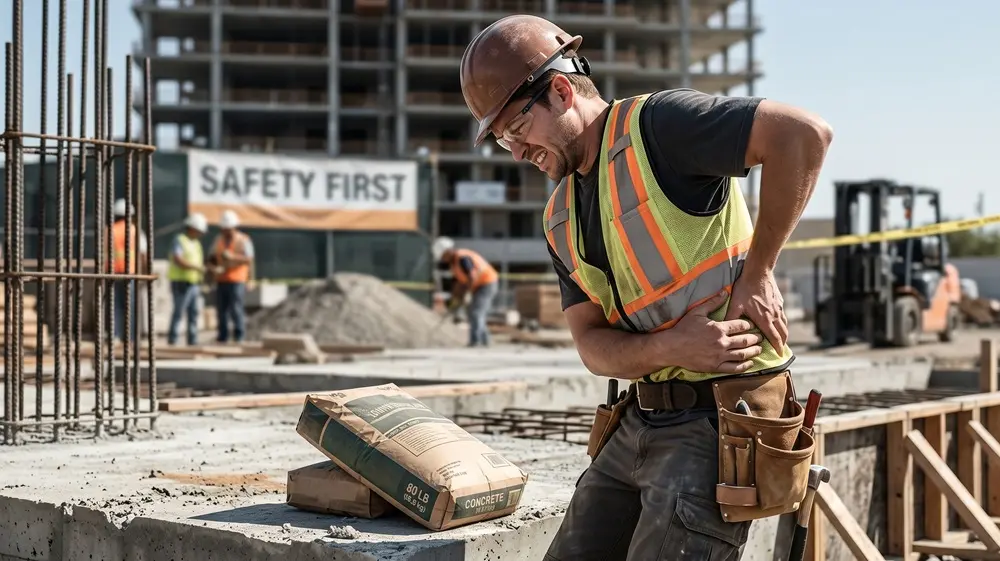
    A serious strain claim should not depend on memory alone. The record should show how the injury moved from job task to medical treatment to wage loss.

    • The claim should spell out what happened: the object, weight, motion, height, pace, tool, surface, ladder, route, body position, and number of repetitions.

    • A written report should identify the body part, the work task, the date or work period, the supervisor notified, and any witnesses.

    • Medical records should state that the injury occurred at work or worsened due to work duties. Vague records give the insurer room to deny.

    • Restrictions show the injury’s effect on the job: no lifting over a certain weight, no overhead work, no climbing, no kneeling, no repetitive gripping, no prolonged standing, or no full duty.

    • Pay stubs, overtime records, schedules, tax records, union records, and disability notes help show the cost of the injury.

    • Photos, video, work orders, broken equipment, safety logs, delivery records, maintenance records, and witness names may reveal a claim beyond workers’ comp.

    Symptoms That Should Not Be Brushed Aside

    A worker should write down symptoms that affect job duties, sleep, driving, or daily life:

    • Sharp pain during lifting, reaching, pulling, kneeling, twisting, gripping, or climbing
    • Muscle spasms or locking
    • Swelling, bruising, warmth, or tenderness
    • Weakness in the injured body part
    • Numbness, tingling, burning, or pain traveling into an arm or leg
    • Loss of grip or reduced range of motion
    • Pain that worsens after each shift
    • Trouble sleeping because of pain
    • Doctor-ordered limits on work activity
    • Missed days, reduced hours, or loss of overtime

    Medical care should not be delayed when pain is severe, strength declines, numbness appears, swelling increases, or the worker cannot safely perform the job.

    This Is the Moment to Get the Record Right

    A strain claim can fall apart when the first report is vague. We help injured workers put the right facts forward: the task, the body part, the medical limits, the missed work, and the wage loss.


    Free Consultation
    Call 24/7 for a Free Case Review
    phone icon
    (781) 242-4100

    Real Stories from real clients

    More Client Testimonials
    Video thumb
    Video thumb
    Video thumb
    Video thumb
    Video thumb
    Video thumb
    Video thumb
    Video thumb
    Video thumb
    Video thumb
    Video thumb
    Video thumb
    Video thumb
    Video thumb
    Video thumb
    Video thumb
    Video thumb
    Video thumb
    Video thumb
    Video thumb
    Video thumb
    Video thumb
    Video thumb
    Video thumb
    Video thumb
    Video thumb
    Video thumb
    Video thumb
    Video thumb
    Video thumb
    Video thumb
    Video thumb
    Video thumb
    Video thumb
    Video thumb
    Video thumb
    Video thumb
    Video thumb
    Video thumb
    Video thumb
    Video thumb
    Video thumb
    Video thumb
    Video thumb
    Video thumb
    Video thumb
    Video thumb
    Video thumb
    Video thumb
    Video thumb
    Video thumb
    Video thumb
    Video thumb
    right for you background

    Why Strain Injury Victims Choose Attorney John J. Sheehan

    Video thumb
    Why Choose Us
    • Feature icon

      Immediate Action

      We step in quickly to protect your rights, secure medical care, and deal with insurance companies.

    • Feature icon

      Proven Results

      With over 30 years of experience and millions recovered, we know how to build strong cases and push for the maximum compensation.

    • Feature icon

      Hablamos Español

      We explain every step of the process in simple terms — in English or Spanish — so nothing gets lost in translation.

    More About Us

    How Attorney Sheehan Builds Strain Injury Claims

    • Step
      1

      The claim starts with the body mechanics. What were you doing? How much did it weigh? How many times did you repeat it? Did you twist, reach, climb, kneel, or pull? Did the crew have enough people? Did the equipment fail? Those details can turn a denied claim into a documented work injury.

    • Step
      2

      A short incident report may say only “back pain” or “shoulder pain”. That is not enough. The record should connect the pain to the job activity, the specific body part, the timing, and the work limits that followed.

    • Step
      3

      The insurer will look for gaps, inconsistent statements, vague records, and prior complaints. Our strain injury lawyers track the first symptoms, first treatment, referrals, therapy, imaging, restrictions, and any change in diagnosis.

    • Step
      4

      A strain injury can cost more than one missed shift. It may take overtime, side work, promotions, union hours, route pay, or future earning capacity. The case needs wage records, tax records, job restrictions, and proof of what work the injury now blocks.

    • Step
      5

      Workers’ comp may pay medical care and part of lost wages. A contractor, property owner, driver, equipment company, or product maker may owe more if that outside party caused or contributed to the unsafe condition.

    • Step
      6

      The insurance company may blame age, home chores, old injuries, sports, weekend work, or “normal degeneration”. Our Boston strain injury lawyers address those defenses with medical records, job-duty evidence, witness statements, and a timeline showing what changed after work.

    Our Legal Process

    Meet Our Team

    Since 1993, Attorney John Sheehan has represented injured workers and accident victims across Massachusetts, fighting for justice against powerful insurers and corporations. Fluent in Spanish and deeply involved in Boston’s Hispanic community, John has earned a reputation for listening, explaining complex legal matters, and securing maximum compensation for his clients.

    Behind John is a strong team of legal professionals who share one goal: providing each client with direct counsel and relentless advocacy. With decades of legal experience, we approach each case with the understanding that every injury and every person is unique.

    Learn More John J. Sheehan
    John J. Sheehan

    John J. Sheehan

    Managing Attorney

    Frequently Asked Questions About Boston Strain Injury Claims

    • Massachusetts workers’ compensation law generally requires a claim to be filed within four years from the date you first knew the injury was connected to your work. Notice should also be given to the employer or insurer as soon as practicable.

    • A third-party personal injury lawsuit in Massachusetts is generally subject to a three-year deadline. That may matter if a contractor, property owner, driver, equipment company, or another outside party caused the strain injury.

    • Report the injury in writing, get medical care, explain the work task to the doctor, follow restrictions, keep copies of all paperwork, and do not give a recorded statement without legal advice.

    • The most useful evidence includes medical records, work restrictions, accident reports, photos, text messages, witness names, pay stubs, schedules, job-duty details, and proof of repeated lifting, gripping, reaching, bending, pushing, or pulling.

    • Report it once you believe work is causing or worsening the condition. Repetitive stress claims often depend on job-duty details, symptom history, medical notes, and a clear timeline.

    • A claim can still be valid if work caused new symptoms, worsened a prior condition, required treatment, imposed restrictions, or resulted in lost wages. The medical record should show what changed after the work activity.

    • Yes, if your doctor allows it and the work fits your restrictions. Do not perform tasks that violate medical limits. Save any light-duty offer, schedule change, or note showing reduced hours or lost overtime.

    • Yes. Spanish-speaking workers can speak with the firm in Spanish about the injury, job duties, medical treatment, deadlines, and claim options.

    Worried You Waited Too Long? Call Before You Guess.
    A severe strain can take your paycheck, your strength, your sleep, and your future job options. Our Boston strain injury attorneys can help connect the injury to your work duties, preserve medical evidence, and pursue compensation available under Massachusetts law.


    Correct First Name is Required
    Correct Last Name is Required
    Correct Phone is Required
    Correct Email is Required

    By providing your phone number, you agree to receive informational text messages from The Law Office of John J. Sheehan. Consent is not a condition of purchase. Message frequency will vary. Msg & data rates may apply. Reply HELP for help or STOP to cancel.

    Thank you! Your submission has been received!
    Oops! Something went wrong while submitting the form.