

When Workplace Noise Steals Your Hearing
Attorney John J. Sheehan fights for Boston workers suffering permanent hearing damage from job site negligence:
Construction sites, manufacturing plants, and industrial facilities across Boston expose thousands of workers to dangerous noise levels every day. When employers fail to provide proper hearing protection or equipment manufacturers sell defective machinery, workers pay the price with permanent hearing loss that destroys careers and changes lives forever.
Unlike broken bones that heal or cuts that close, hearing damage is permanent. Once the delicate structures inside your ear are destroyed by excessive noise, they never recover. You deserve compensation for this lifelong disability, and Massachusetts law gives you two powerful ways to fight back.
How Workplace Noise Destroys Hearing
- Prolonged Exposure to Loud Equipment — Jackhammers, concrete saws, pile drivers, and heavy machinery operating above 85 decibels for extended periods.
- Sudden Acoustic Trauma — Explosions, pressurized equipment failures, or pneumatic tool accidents causing immediate, severe hearing loss.
- Lack of Hearing Protection — Employers who fail to provide earplugs, earmuffs, or noise-canceling equipment required by OSHA regulations.
- No Hearing Conservation Programs — Construction companies that ignore mandatory audiometric testing and noise exposure monitoring.
- Defective Safety Equipment — Hearing protection devices that fail to meet manufacturer specifications or provide inadequate noise reduction.
OSHA requires hearing protection whenever noise levels exceed 85 decibels over an 8-hour workday. Most Boston construction sites regularly exceed 95-100 decibels, yet many workers never receive proper protection or training. Attorney Sheehan holds negligent employers and third parties accountable for this preventable injury.
Common Causes of Hearing Loss on Boston Job Sites

The Law Office of John J. Sheehan handles hearing damage cases across all construction and industrial settings:
Boston's building boom creates constant exposure to dangerous noise levels. Heavy equipment operators, demolition crews, concrete workers, and steel fabricators are exposed to sustained noise from jackhammers (130 dB), concrete saws (110 dB), pile drivers (120 dB), and rock drills (115 dB). When general contractors fail to enforce hearing protection zones or rotate workers to limit exposure, gradual but permanent hearing loss results.
Textile manufacturing facilities in Chelsea, metalworking shops in Dorchester, and automotive repair facilities throughout Boston expose workers to grinding equipment, stamping presses, conveyor systems, and ventilation machinery. Employers who skip required audiometric testing or ignore OSHA's hearing conservation program requirements leave workers defenseless against noise-induced hearing loss.
Compressed-air system failures, pneumatic-tool explosions, electrical-transformer blasts, and chemical-plant accidents can cause instant, catastrophic hearing damage. These single-event injuries often combine total hearing loss with severe tinnitus and balance disorders that make returning to construction work impossible.
Earplugs that don't seal properly, earmuffs with inadequate noise-reduction ratings, or safety equipment that degrades in construction environments create a false sense of security. When manufacturers misrepresent noise-reduction capabilities or produce defective hearing protection, workers suffer permanent hearing loss despite believing they're protected.
On projects involving multiple subcontractors, responsibility for hearing safety often falls through the cracks. One contractor's excessively loud equipment, combined with another's failure to provide hearing protection, creates liability for both. Attorney Sheehan investigates the entire chain of responsibility to identify every negligent party.
Ready to Fight for Your Hearing Loss Claim?
Get your free consultation with Boston's workplace hearing damage lawyer.

Two Ways to Recover Compensation for Hearing Loss
Attorney Sheehan pursues both workers' compensation benefits and third-party lawsuits to maximize your recovery:
Massachusetts Workers' Compensation for Hearing Loss
Workers' compensation covers all employees who suffer occupational hearing loss, regardless of how long the damage took to develop. Massachusetts law provides specific benefits for hearing impairment measured through professional audiometric testing.
What Workers' Comp Covers:
- Medical Treatment — Audiologist evaluations, hearing aids ($2,000 to $7,000+ per ear), cochlear implants, follow-up audiology appointments, and assistive listening devices;
- Permanent Disability Benefits — Compensation based on your percentage of hearing loss in both ears, calculated using Massachusetts DIA formulas;
- Weekly Benefits During Recovery — Partial wage replacement if hearing loss prevents you from performing your regular job duties;
- Vocational Rehabilitation — Retraining programs when hearing damage makes construction work unsafe or impossible.
The Challenge: Employers and insurance companies aggressively fight hearing-loss claims, arguing that your hearing loss is due to aging, prior employers, or non-work noise exposure. Attorney Sheehan counters these defenses with medical evidence, workplace noise measurements, and expert testimony proving your hearing loss is occupational.
Third-Party Lawsuits for Full Damages
When someone other than your direct employer caused your hearing loss, you can sue for complete compensation beyond workers' compensation limits. Third-party defendants include:
- Equipment Manufacturers — Companies that produced defective jackhammers, saws, drills, or other noise-generating tools without proper warnings or noise reduction engineering.
- General Contractors — Main contractors who failed to enforce OSHA hearing protection requirements across multi-contractor construction sites.
- Other Subcontractors — Separate companies whose negligent operation of loud equipment or failure to maintain noise barriers damaged your hearing.
- Property Owners — Building owners who created or ignored excessive noise hazards during renovation or construction projects.
- Safety Equipment Suppliers — Manufacturers or distributors who sold hearing protection devices that didn't meet advertised noise reduction ratings.
Third-party claims recover damages completely unavailable through workers' compensation, including pain, suffering, full lost wages, loss of life enjoyment, and compensation for your family's losses.
What Your Hearing Loss Claim Is Worth
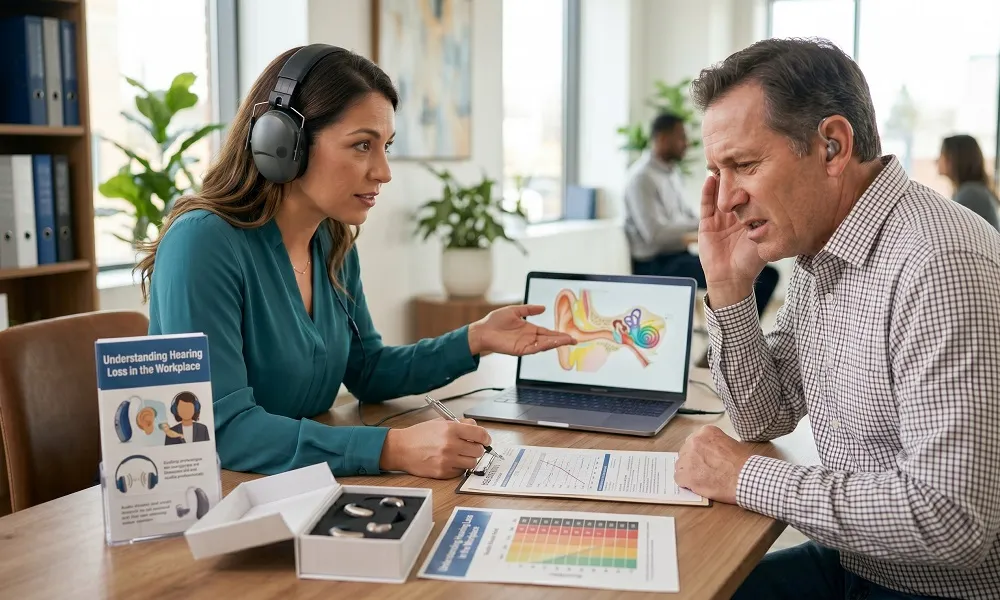
Workers' Compensation Value
Massachusetts calculates hearing loss disability based on binaural hearing impairment percentages. A worker with 50% binaural hearing loss might receive $40,000-$80,000 in permanent partial disability benefits, plus lifetime coverage for hearing aids and related medical care. Benefits increase with the severity of hearing damage and the worker's average weekly wage.
Third-Party Lawsuit Recovery
Complete hearing loss cases involving clear third-party negligence can yield $200,000 to $750,000+, depending on:
- Severity of Hearing Damage — Partial hearing loss versus total deafness in one or both ears.
- Age and Earning Capacity — Younger workers lose more lifetime earnings when hearing damage ends construction careers.
- Accompanying Conditions — Severe tinnitus, balance disorders, or psychological trauma increase claim value.
- Impact on Life Quality — Inability to communicate with family, enjoy music, or participate in social activities.
- Future Medical Needs — Ongoing costs for hearing aid replacements, batteries, adjustments, and potential cochlear implants.
Real Example: A 42-year-old demolition worker with complete hearing loss in his right ear and 60% loss in his left ear from defective hearing protection received $485,000 from the equipment manufacturer, plus $75,000 in workers' compensation benefits, with a total recovery exceeding $560,000.
Get Your Free Case Review Now